Why Every Excavator Operator Needs a High-Quality Roller Compactor
Let’s get real for a second. If you’ve spent any time operating heavy machinery in the dirt, you already know the construction industry doesn’t hand out participation trophies. You either get the job done on time, or you lose money. It really is that simple. Excavators are easily the most versatile machines sitting on any job site right now, but a lot of contractors are leaving money on the table by treating them like glorified shovels. If you want to turn that standard digger into an absolute powerhouse, you need the right attachments. And honestly? Nothing flips the script on ground preparation quite like a High-Quality Roller Compactor.
We’ve all been there—you finish digging a trench, and then everything grinds to a halt while you wait for a ride-on roller or a guy with a walk-behind tamper to finish the job. It’s frustrating, and it bleeds your profit margins dry. Throwing an excavator roller compactor onto your rig changes all of that instantly.
You get to use the massive hydraulic power and dead weight you already have sitting in the cab to pack down the earth. This means no more waiting around. No more dragging separate compaction machines from site to site. You just swap the bucket for the roller, pack the dirt tight, and move on to the next phase of the build. So, let’s dig into exactly why adding this specific tool to your arsenal is pretty much mandatory if you want to stay ahead in this business.
Say Goodbye to Dead Time: Pushing Productivity Off the Charts
Time is quite literally money when you’re staring down a tight project deadline. The old-school way of doing things—digging your trenches, moving the excavator out of the way, and then bringing in a dedicated compaction crew—is just entirely too slow for modern contracts. But when you snap a High-Quality Roller Compactor onto your boom, you’re suddenly operating on a whole different level.
These attachments work by combining intense, high-frequency vibrations with the heavy downward push of the excavator arm itself. That one-two punch forces the trapped air right out of the soil, packing the particles together faster than a standalone machine ever could. And here’s the best part: because you control it with the boom, you can hit weird angles, deep ditches, and steep slopes that would be a nightmare (or flat-out impossible) to reach otherwise. You don’t have to reposition the whole machine just to get a good angle. You just reach out, compact the dirt, and keep moving.
- Cutting out the downtime: You can swap from digging a hole to backfilling and packing it down in a matter of minutes, keeping your machine moving and earning its keep.
- Hitting the hard-to-reach spots: The sheer reach of an excavator boom means you can easily drop the compactor deep into trenches where walk-behind units are just way too clunky to maneuver.
- Ditching the backbreaking labor: By handling the compaction right from the joystick, you’re saving your ground crew from the exhausting, slow process of manual hand-tamping.
Locking Down the Dirt: Why Serious Compaction Actually Matters
You can build the most beautiful structure in the world, but if the dirt underneath it is soft, you are going to have a massive problem on your hands. Everything relies on the ground being solid. If you don’t hit the right soil density, the earth is going to settle, foundations will crack, and you’ll be on the hook for some incredibly expensive repairs down the road.
This is where a High-Quality Roller Compactor flexes its muscles. It delivers deep, heavy vibrations that shake the ground to its core, forcing the soil and gravel to lock together so tight that it essentially becomes rock-solid.
This process kills the porosity in the dirt. It means the earth can handle heavy traffic, huge buildings, and terrible weather without shifting an inch. Whether you are dealing with loose, sandy gravel or sticky, stubborn clay, this attachment makes sure your base layer isn’t going anywhere.
- Stopping the ground from sinking: By forcing all the hidden air pockets out of the dirt, you prevent the ground from settling and causing structural nightmares later.
- Holding up the heavy stuff: Properly packed earth takes on a massive amount of weight, which you absolutely need when laying down parking lots, highways, or commercial foundations.
- Keeping the water out: When dirt is packed this tight, it practically acts like a waterproof barrier. It stops rain and groundwater from seeping in and washing away your hard work.
One Machine, A Dozen Different Jobs
If there is one thing every contractor hates, it’s a one-trick pony. You don’t want to buy an expensive piece of equipment that only does one specific job. That’s why a High-Quality Roller Compactor is such a brilliant investment—it is absurdly versatile. You can take this thing from a massive highway expansion project straight to a delicate suburban landscaping gig, and it will handle both perfectly.
The trick is that these attachments come in different styles to match the dirt you’re working with. Got a bunch of sticky, wet clay? Throw on a padfoot drum and let it knead the soil together. Need to prep a flat gravel subgrade for a new road? A smooth drum gives you that perfect, polished finish. It basically turns your single excavator into a Swiss Army knife, letting you bid on a much wider variety of jobs without having to buy a whole fleet of extra machines.
- Mastering the trench work: It packs down the dirt around expensive utility pipes perfectly without putting a worker at risk inside a deep, sketchy trench.
- Owning the steep hills: You can safely pack down steep slopes and awkward embankments that would immediately flip a traditional ride-on roller.
- Swapping drums for the dirt: You aren’t stuck with one style. You can use smooth drums for the loose stuff and padfoot drums to aggressively pack down heavy clay.
Keeping Your Crew Safe and Your Insurance Low
Let’s talk about safety, because nobody wants a phone call saying one of their guys got hurt on the site. Traditional trench compaction is inherently dangerous. Sending a worker down into a deep, freshly dug hole with a heavy, vibrating walk-behind tamper is basically asking for a cave-in. It’s risky, and frankly, it’s outdated. Slapping a High-Quality Roller Compactor onto your machine changes the whole game.
The operator gets to sit in a climate-controlled, reinforced cab, completely out of harm’s way, while the machine does all the heavy lifting in the trench. On top of that, you are saving your crew from the physical beating of running manual compactors all day. Hand-arm vibration syndrome is a real issue that ruins joints and nerves. Letting the excavator absorb those shocks instead of your workers’ arms just makes sense.
- Getting guys out of the trenches: You completely remove your crew from the immediate danger zone, virtually erasing the risk of someone getting trapped in a trench collapse.
- Saving joints and nerves: The machine takes the beating, so your workers don’t have to suffer from the brutal vibrations of manual tamping equipment.
- Staying flat while working on a slant: The excavator can sit safely on level ground while the boom extends down to pack away at a steep, dangerous slope.
Let’s Talk Money: Trimming the Fat off Your Fleet Costs
At the end of the day, construction is a business, and managing the cost of your fleet is a constant headache. Buying, maintaining, and hauling around a bunch of different machines eats into your profit margins like crazy.
Why would you pay for a separate ride-on roller, pay to keep its engine running, and pay a driver to haul it on a second flatbed, when your excavator can do the job? Investing in a High-Quality Roller Compactor attachment is an instant money-saver. You are essentially getting two machines for the price of one.
You only have to put fuel in one tank. You only have to service one engine. And you only need one trailer to get it to the job site. The amount of cash you save on rental fees and maintenance alone means this attachment pays for itself incredibly fast.
- Slashing the repair bills: It is significantly cheaper and easier to grease and maintain an attachment than it is to service the engine and transmission of a whole separate machine.
- Making transportation easy: You aren’t paying for an extra truck and trailer to haul a dedicated compactor across town. One trip, one machine.
- Keeping your iron busy: Instead of letting your excavator sit around burning fuel while a rental machine does the packing, you keep your asset working and making you money.
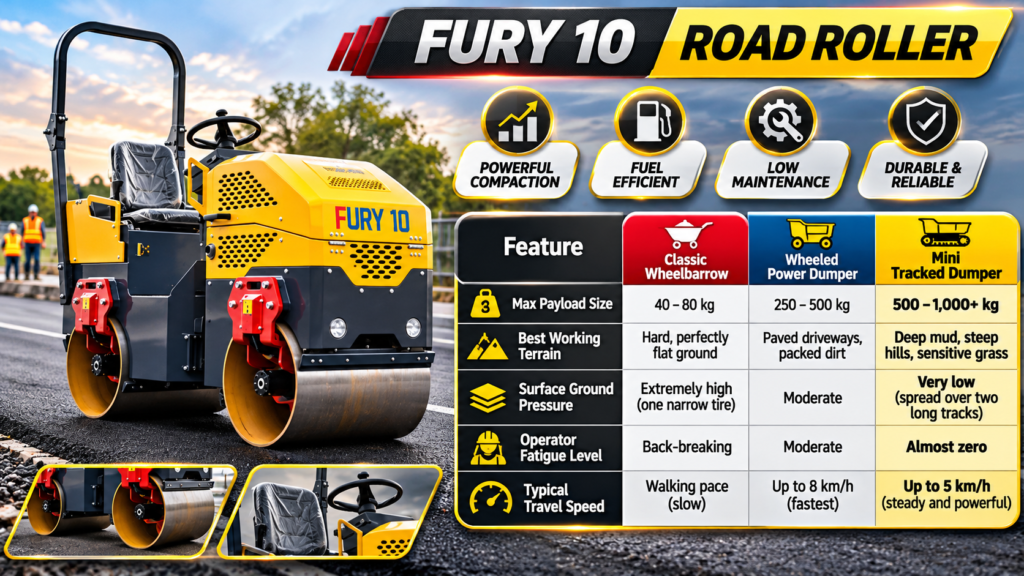
Analyzing Excavator Roller Compactor Types
Before you pull the trigger on a new attachment, you need to know exactly what kind of drum you need for the soil you deal with most often. Choosing the wrong style will just give you a headache. Here’s a quick breakdown of what works best.
Table: High-Quality Roller Compactor Uses
| Compactor Drum Type | Surface & Material Fit | How It Actually Works | Best Real-World Uses |
| Smooth Drum Roller | Gravel, sand, asphalt, granular dirt | Blends heavy static weight with rapid vibrations to press everything flat and dense. | Prepping subgrades for roads, flattening parking lots, and rolling out pathways. |
| Padfoot (Tamping) Roller | Heavy clay, sticky mud, silt | Uses aggressive, raised metal lugs to punch deep into the dirt and knead it together from the bottom up. | Trench backfilling in bad dirt, dam building, and heavy embankment work. |
| Compaction Wheel | Mixed job-site dirt, rough fill | Doesn’t vibrate. It’s a passive wheel that just uses the massive downward pressure of the excavator arm to roll over and crush the dirt. | Quick utility pipeline covering and rough site stabilization. |
FAQs About High-Quality Roller Compactor
What exactly is an excavator roller compactor?
It’s a heavy-duty attachment you pin onto the end of your excavator’s boom. It taps into the machine’s hydraulic lines to create massive vibrations, letting you use the weight of the boom to pack down dirt and gravel.
Why is a High-Quality Roller Compactor better than pushing a walk-behind unit?
It hits harder, compacts deeper, and keeps your guys safe. You don’t have to deal with the physical exhaustion of fighting a manual tamper, and you keep workers out of dangerous trenches entirely.
Can you really use a roller compactor for deep trench work?
Absolutely. In fact, it’s the safest way to do it. The boom drops the roller right into the trench to pack the dirt around pipes without ever risking a human life near an unstable dirt wall.
What is the real difference between a smooth drum and a padfoot roller?
A smooth drum gives you a flat, clean finish on loose stuff like sand and gravel. A padfoot roller has spikes (lugs) that aggressively dig into sticky clay to force it together. Using the wrong one will just make a mess of your site.
How does using an excavator compactor attachment save on insurance?
By keeping your ground crew out of trenches and away from vibrating hand tools. Fewer cave-in risks and less hand-arm vibration syndrome means fewer workers’ comp claims.
Are all of these excavator compaction attachments fully hydraulic?
Nope. Vibratory rollers and plate compactors use your hydraulics to shake. But a Compaction Wheel is completely passive—it just relies on the brute strength and weight of your boom pushing down on it to crush the dirt.
How do I make sure I choose the right roller compactor for my specific machine?
You need to look at your daily dirt (is it clay or sand?) and then match the attachment to your excavator’s weight class and hydraulic flow rating. Slapping a massive roller on a mini-excavator just isn’t going to work out well.
Wrapping It Up – High-Quality Roller Compactor
In a business where margins are tight and deadlines are tighter, you can’t afford to do things the slow way anymore. Grabbing a High-Quality Roller Compactor isn’t just about buying a new toy for the fleet; it’s a calculated move to get more done with less hassle.
By making your excavator do double duty, you’re packing dirt tighter, keeping your guys out of the hospital, and moving on to the next paycheck faster. Stop waiting around for standalone rollers to show up on the site. Pin one of these attachments onto your machine and watch how quickly your workflow changes for the better.