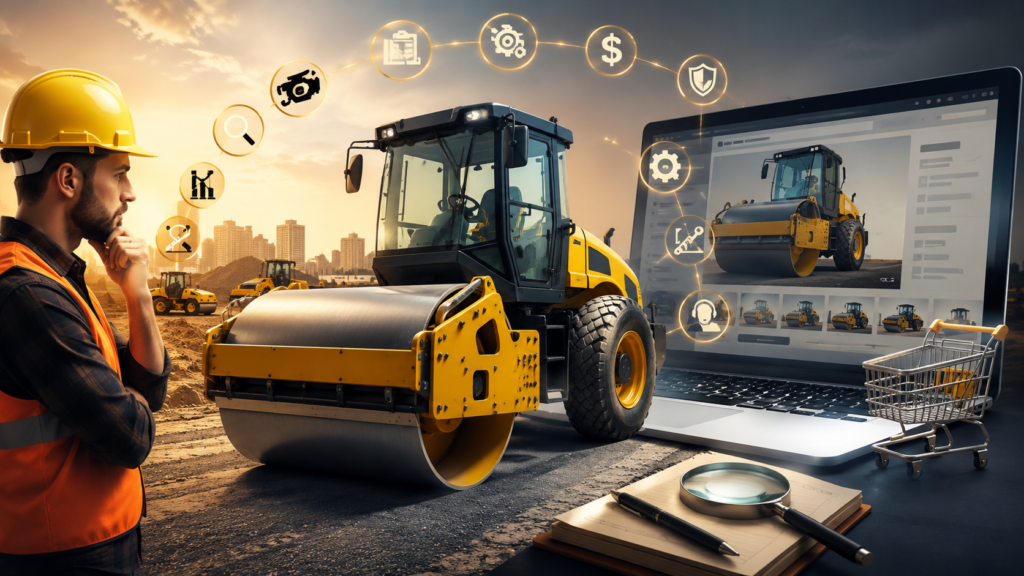
10 Things You Should Know Before Buying Roller Compactor Online
Welcome to the exciting world of construction machinery. Buying heavy equipment is a huge investment, and navigating the digital world to find the right machine adds another layer of complexity. When you are planning to buy a roller compactor online, you need a sound approach to get the best value, performance and dependability for your construction projects.
Roller compactors are an important piece of equipment used to densify material for road building or site preparation. At Roller Compactor (rollercompactor.net) your trusted partner in densification expertise, we want to give you the right knowledge. This guide walks you through the top ten things you should consider before clicking that buy button to make sure your next heavy equipment purchase is a big success.
Top 10 Things You Should Know Before Buying Roller Compactor Online
1. Learn About the Various Types of Roller Compactors
When you decide to buy a roller compactor online, the first thing that you need to do is to know the different types of machines available in the market. Roller compactors are not a one-size-fits-all machine. Different models are produced to meet the needs of different job sites with different drum configurations and compaction methods.
It’s good to understand these differences, whether you’re flipping through vendor catalogs or checking specs on our platform. Wrong decisions can lead to inefficient densification of materials, compromises of integrity and wasted operating hours.
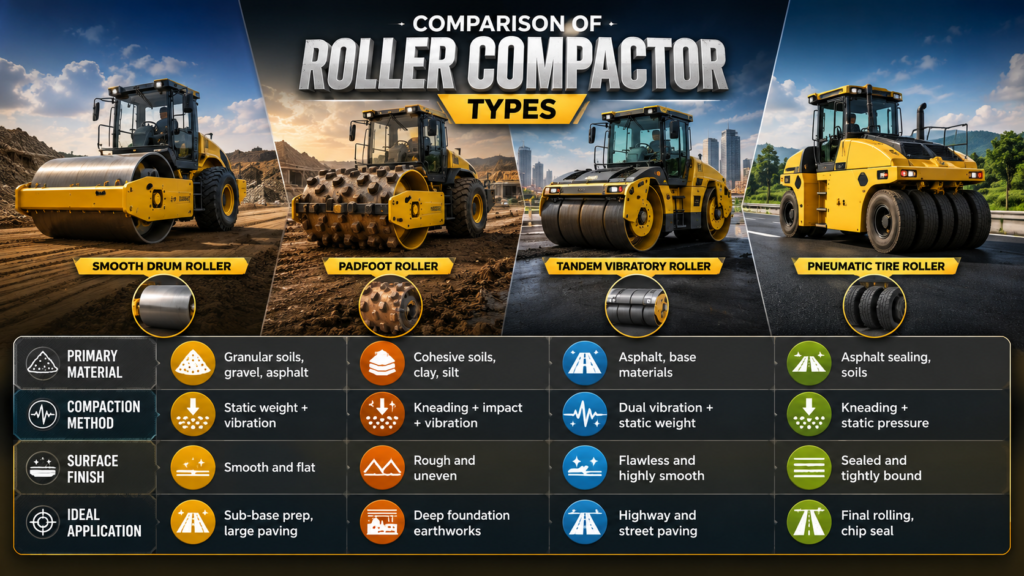
- Smooth Drum Rollers: They have a large, flat steel drum and are very effective in compacting granular materials such as gravel, sand and asphalt. They produce a smooth, uniform surface finish which is critical for road base preparation and final paving.
- Padfoot (Sheepsfoot) Rollers: These rollers are equipped with tapered, projecting lugs, or “feet”, on the drum which are used to penetrate and knead cohesive materials such as clay and silt. The heavy impact breaks down the soil structure, pushing air voids out for deep, stable compaction.
- Tandem Vibratory Rollers: These are also known as double drum rollers and equipped with two smooth steel drums (front and back) and are primarily used for asphalt paving. The dual-drum concept guarantees uniform compaction and a perfect finish, with the operator easily able to manoevre the machine.
2. Look over the scope and material requirements for your project
If you are shopping for a roller compactor online, you need to match the machine to the materials you will be compacting. Compaction is achieved by the application of the correct combination of static weight, vibration and kneading action to expel air voids from the soil or asphalt matrix. But before ordering online, take a moment to think about the scope of projects you have coming up and the main soil types you expect to work in.
- Granular Soils and Base Materials: If your project involves a lot of sand, gravel and crushed stone, the vibratory smooth drum roller is the way to go. The high frequency vibrations transport the particles in a tightly locked dense configuration.
- Cohesive and Sticky Soils: Heavy clay and silt soils require more than vibratory force. You need to pick a padfoot roller that can cut through the thick layers and deliver the right amount of shear force to get the perfect balance of moisture and density.
- Asphalt and Surface Finishing: For your main applications being pavement and asphalt patching, a tandem roller or a pneumatic tire roller is a must. These machines seal the surface without tearing the delicate asphalt mat, creating a smooth, long-lasting roadway.
3. Determine Ideal Roller Compactor Size and Weight
Size and operating weight are probably the most important factors when you buy a roller compactor online because they directly determine the machine’s compaction depth and coverage speed.
A large machine will cover more ground per hour, but it is not nimble enough to work in tight urban spaces, while a mini roller compactor has excellent maneuverability, but will take many more passes to reach the required density on a large highway project. You have to balance the physical size of the machine against the logistical constraints of your job sites.
- Walk-Behind and Mini Rollers (Under 3 Tons): Best for tight spaces, trench backfill, landscaping and small driveway repairs. They are easily transportable, highly maneuverable and cost effective for smaller contracting firms .
- Mid-Size Rollers (3 to 8 Tons): The construction industry’s versatile workhorses. They offer the ideal combination of compaction power and ease of access, ideal for commercial parking lots, medium road repairs and general site prep.
- Heavy-Duty Road Rollers (8 Tons and beyond): Used for huge infrastructure projects, highway building and massive earthmoving. These heavyweights provide huge compaction power for deep lifts but need specialized transport trailers and large open operation areas.
4. Examine Engine Power and Fuel Economy
If you’re serious about buying a roller compactor online, it’s easy to get wrapped up in only looking at drums and vibration specs, but the engine is the beating heart of the machine. A powerful engine ensures constant speed and vibratory frequency of the compactor even when working on steep gradients or on very resistant layers of soil. Also, today’s construction projects demand that you keep a close eye on fuel consumption, as inefficient engines will quickly eat away at your profits over the life of the equipment.
- Horsepower and Torque Ratings: Make sure the machine has enough power to run the heavy hydraulic pumps and drive motors without bogging down under heavy load. If you are going to be doing a lot of off-road driving over rough and uneven terrain, more horsepower is essential.
- Fuel Consumption Rates: Choose the latest electronically controlled engines that give the best fuel. Good fuel economy saves you money on your daily operating costs and cuts down on the downtime of frequent recharging on the job site.
- Emission requirements Compliance: Ensure the engine meets the latest environmental emissions criteria (e.g. Tier 4 Final in the US or Stage V in Europe). Compliant engines may also reduce your carbon footprint, and are often necessary to bid on government and municipal contracts.
5. Look for Advanced Technologies and Controls
Modern compaction equipment is no stranger to the fast digital transition in the construction sector. When you are purchasing a roller compactor online you should be actively seeking for models that have sophisticated technical characteristics. These advances transform an ordinary heavy machine into a highly accurate data-driven instrument that takes the guessing out of the compaction process so you don’t under-compact (leading to structural collapse) or over-compact (crushing aggregate and wasting time).
- Intelligent Compaction (IC) Systems: Integrated systems that use accelerometers and GPS technology to monitor the stiffness of the compressed material in real time. The data is shown on an in-cab monitor so that the operator may modify speed and vibration on the go for consistent outcomes.”
- Telematics and Fleet Management: Integrated telematics enables you to remotely monitor the machine’s location, operating hours, fuel consumption, and diagnostic codes. This data is necessary to schedule preventive maintenance and optimize equipment efficiency.
- Ergonomically Designed Operator Interfaces: Expect easy joystick controls, quick hydraulic steering and well-organized digital dashboards. An intuitive control system that is pleasant to use decreases operator fatigue and considerably reduces the chance of expensive on site mistakes.
6. See the Roller Compactor Parts & Accessories
The life of your equipment over the long term depends on how good each part is. Since you are buying a roller compactor online and cannot kick the tires, you have to rely on detailed specifications, high-resolution photographs, and the vendor’s transparency about the machine’s anatomy. As we often mention at rollercompactor.net, durable roller compactor parts are a necessity for effective, continuous operation.
- Drum Shell Thickness and Material: The drum will experience a lot of friction and impact. Insist that the maker use high-grade, wear-resistant steel, with a shell thickness that will stand up to years of hard abrasion without warping or denting.
- Hydraulic System Integrity: The hydraulic pumps and motors are the “muscles” that move the machine and cause vibration. Choose systems from reputable OEMs, since with reliable hydraulics you’ll have exact control over compaction pressure and travel speed.
- Scraper Blades & Maintenance Accessories: Good scrapers are a must for keeping the drum clean, particularly with sticky asphalt or damp clay. Ensure the machine has readily replaceable attachments or leveling blades to make it more adaptable in operation.
7. Check safety features and certifications
Heavy civil engineering cannot afford to think of safety as an afterthought. Operating a multi-ton vibrating machine is inherently dangerous for the operator as well as the ground crew. When buying a roller compactor online, check the safety specifications and structure certifications of the equipment carefully. A safe work environment not only saves lives, but also protects your business from costly liabilities and regulatory penalties.
- Roll-Over Protection Structures (ROPS): It is essential that the machine has a certified ROPS cab or canopy. This structural cage is the main body of protection for the operator from deadly crushing injuries in the event the machine tips over on a steep embankment.
- Enhanced Visibility and Camera Systems: Inadequate visibility is a primary factor in job site accidents. Look for machines with large, open windows, rotating operator seats and integrated backup cameras that eliminate blind spots around the bulky drum and engine compartments.
- Emergency Stop and Braking Systems: The compactor should be equipped with readily accessible emergency stop switches and fail-safe hydrostatic brake systems that shall immediately apply in the event of engine failure or loss of hydraulic pressure.
8. Check Maintenance Requirements and Spare Parts Availability
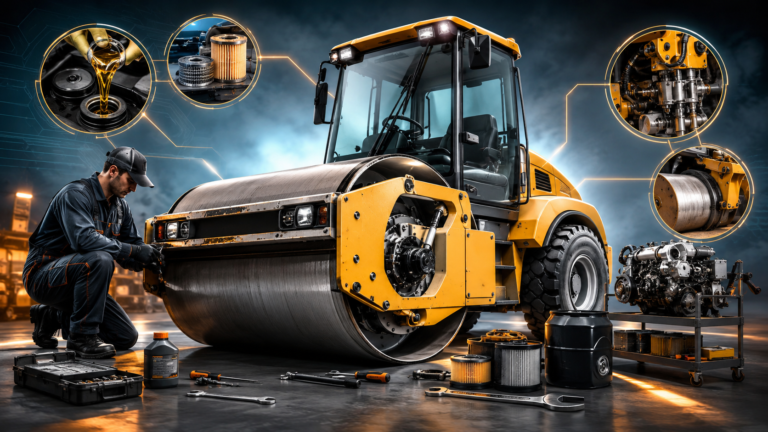
And even the toughest heavy equipment needs regular service to keep it running at optimal efficiency. The hidden expense of purchasing a roller compactor online is the possible downtime if you struggle to locate new parts or carry out simple maintenance. Here at rollercompactor.net we are great believers in preventive maintenance schedules. Check availability of crucial components on the machine before buying. Keep a strong stock of vital spares.
- Ground-Level Service Checkpoints: The best equipment designs incorporate daily inspection points, such as oil dipsticks, hydraulic fluid sight gauges, and air filters, on one side of the equipment that is accessible from the ground. It encourages operators to do their daily walk rounds.
- Maintenance Interval Schedules: Look at manufacturer recommended service intervals. Machines with extended service intervals (e.g. 500 hours for engine oil, 1,000 hours for hydraulic fluid) will reduce your long term maintenance costs and keep the machine working on site longer.
- Reliable Spare Parts Network: Make sure you can easily get consumable parts such as air filters, scraper blades and hydraulic hoses. Sure, you might save a few dollars in the short term by buying an obscure brand online, but then waiting weeks for a proprietary replacement part shipped from overseas will wreck your project schedule.
9. Review the Warranty, Shipping & Return Policies
Buying a roller compactor online is a very different exercise to buying consumer goods. You are coordinating the transit of a several ton piece of equipment. And since you are doing this electronically, you need cast-iron assurances about the condition of the machine when it arrives, and your recourse if it is not what you expected, or if it suffers an immediate mechanical failure.
- Comprehensive Warranty Coverage: Study the warranty’s fine print. Understand the difference between full machine and powertrain-only warranties. Be aware of what actions (such as poor maintenance) could nullify the warranty entirely.
- Freight and Delivery Logistics: Determine who pays for the freight and unloading of the heavy machine at your yard or job site. Make sure the seller uses seasoned heavy haul carriers and that there is insurance in transit.
- Clear Return or Dispute Policies: Know the vendor’s policy for returns, exchanges or mechanical remediation if the equipment is delivered with undisclosed damage or critical faults. A reputable online dealer will have a clear protocol for handling these rare but serious situations.
10. Check vendor’s reputation and customer reviews
Finally, when buying a roller compactor online, the most powerful weapon in your arsenal is the collective experience of past buyers. Reputation is the currency of the digital marketplace. You need to take a good look at the online dealer or marketplace before you move big money. Don’t just look at the machine, look at the entity selling it, see if they are a trusted partner in the construction industry.
- Real Buyer Testimonials: Don’t just look at the handpicked reviews on the seller’s homepage. Check industry forums, heavy equipment portals and independent review sites to see what real contractors are saying about the reliability of the machines and how supportive the vendor is in after sales service.
- Industry Authority and Longevity: Vendors that have been in the heavy equipment business for years and consistently produce valuable resources (like the expert guides at rollercompactor.net) prove they are serious about the industry and not just looking to make a quick sale.
- Responsive Customer Service: Test the vendor’s communication before buying. If you have any technical questions about the machine’s hydraulic system or the compaction amplitude, give their sales or support lines a call. Prompt, knowledgeable answers speak volumes about a vendor who will support you long after the transaction is complete.
Table: Comparison of Roller Compactor Types
| Feature | Smooth Drum Roller | Padfoot Roller | Tandem Vibratory Roller | Pneumatic Tire Roller |
| Primary Material | Granular soils, gravel, asphalt | Cohesive soils, clay, silt | Asphalt, base materials | Asphalt sealing, soils |
| Compaction Method | Static weight + vibration | Kneading + impact + vibration | Dual vibration + static weight | Kneading + static pressure |
| Surface Finish | Smooth and flat | Rough and uneven | Flawless and highly smooth | Sealed and tightly bound |
| Ideal Application | Sub-base prep, large paving | Deep foundation earthworks | Highway and street paving | Final rolling, chip seal |
FAQs – Buy Roller Compactor Online
What is the difference between single drum and double drum roller compactor?
A single drum roller features one huge steel cylinder in the front and pneumatic tires in the back. They are extremely maneuverable and are perfect for thick dirt and for preparing land for foundations. Double drum (tandem) roller features front drum and rear drum made of steel which gives consistent compaction and extremely smooth finish. This is the common roller for asphalt paving jobs.
How to choose the proper size roller compactor for your project?
The optimum size will be determined by the area of your project and the depth that the material has to be compacted. Small tasks in narrow locations like driveways employ mini rollers (1-3 tons). The 4-8 ton rollers will serve medium size projects well, but big highway projects or deep soil lifts will need to be rolled with heavy duty rollers of 10 tons or more to get adequate density in an efficient manner.
Can roller compactors be used on soil and asphalt?
Some versatile smooth drums can do both, but they usually specialize in one or the other. Soil compactors normally have larger amplitudes to punch force deep into the ground. Asphalt rollers use higher frequencies and water spray systems to prevent the hot asphalt from sticking to the steel drums.
How do I know when my roller compactor requires service?
Typical signs of hydraulic system problems include unusual engine sounds, abrupt hydraulic pressure dips, changes in vibration levels, inconsistent surface finishes, oil leaks beneath the equipment and sluggish steering. Routine daily checks of roller compactor parts may help discover such issues before the full breakdown of the machine.
Can I purchase a roller compactor online safely?
Yes, it is okay to purchase a roller compactor online as long as you buy from respectable dealers, famous heavy equipment marketplaces, or known industry authority like rollercompactor.net. Always check the reputation of the seller, demand full specs of the equipment and confirm the warranty and delivery policies are explicit and in writing before you buy.
What is the difference between static and vibratory roller?
Static rollers are limited to using their weight to push down on whatever is underneath them. Vibratory rollers provide compaction not only by their static weight but also by high frequency mechanical vibrations which shock the particles into a tighter arrangement and so achieve more density in significantly fewer passes than a static machine.
What is the difference between a padfoot roller and a smooth drum roller?
Smooth drum rollers have a flat steel surface that crushes and smooths granular soils and pebbles. A padfoot roller has a drum that is studded with thick steel studs (pads) that protrude from the drum. The pads are meant to penetrate and knead sticky cohesive soils such as clay, breaking down the material to eliminate trapped air and moisture.