Subgrade Compaction Secrets: Preparing Flawless Foundations for Heavy Infrastructure
Hey there. If you’ve spent any time working in heavy construction or site prep, you already know that what hides under the ground matters just as much as what you build on top of it. At Roller Compactor, we’ve seen our fair share of massive projects including Subgrade compaction.
Whether a crew is paving a multi-lane highway, laying out a massive airport runway, or pouring concrete for a giant industrial warehouse, they all rely on one absolute necessity: a foundation that refuses to budge.
The real magic of making that happen takes place during subgrade compaction. It’s the gritty, unglamorous, behind-the-scenes dirt work that keeps heavy infrastructure from sinking into a cracked, muddy mess down the road.
If the native dirt isn’t prepped and packed exactly right, your multi-million dollar project is going to shift, settle, and cost an absolute fortune to fix. It takes the right mix of soil science, an experienced operator in the cab, and some serious heavy iron. Let’s walk through the actual secrets of how to get this right so you can reliably build heavy infrastructure foundations that stand the test of time.
What Is Subgrade Compaction And Why Does It Actually Matter?
Let’s break it down into plain English. Subgrade compaction is basically the process of taking loose dirt and squeezing all the trapped air pockets out of it so the soil particles lock tightly together.
When you’re building heavy infrastructure, this compacted layer of earth takes on the entire weight of the final project. Every single loaded semi-truck that drives over that highway, and every ton of steel and concrete resting on those footings—it all pushes directly down onto the subgrade.
If your dirt crew doesn’t hit the specific density requirements, the ground will eventually give way under all that stress. You’ll end up with massive potholes, terrifying structural cracks, or even a total collapse.
Running over the dirt with heavy iron locks the soil down so it can survive harsh freezing winters and totally washed-out spring rainstorms. It also tightens up the ground so water can’t easily seep in, pool up, and ruin everything you just spent weeks building.
- Boosts raw holding power: Proper subgrade compaction gives the native soil the sheer strength it needs to carry insanely heavy loads without sinking or blowing out.
- Stops uneven settling: It keeps the ground from shifting in different directions over time, which is usually the number one reason large concrete slabs crack in half.
- Blocks sneaky water damage: Tight packing literally seals the surface so rainwater can’t soak in, keeping the dirt from swelling up like a wet sponge during the rainy season.
Hitting the Sweet Spot with Moisture and Density
Here’s a secret that catches a lot of rookies totally off guard on the job site: you can’t just beat the dirt into submission with the biggest machine you can find. You actually need water. Soil compaction is entirely about finding that perfect, delicate balance of moisture. Geotech engineers call this the Optimum Moisture Content (OMC).
Basically, water acts like grease for the dirt. It helps all those jagged, dry little soil particles slide past each other until they pack together incredibly tight, hitting what the inspectors call Maximum Dry Density. If the dirt is dry as a bone, no amount of heavy rolling will get you to pass inspection.
The dirt just grinds against itself and stays loose. But on the flip side, if it’s a muddy, sloppy soup, the water actually pushes the dirt apart, making the ground feel like a giant, rolling waterbed underneath your machine. Dialing in that moisture perfectly is how you lock in flawless foundations every single time.
- Testing before rolling: You’ve got to run proper lab tests—like a Proctor test—so your dirt crew knows exactly how much water the soil needs before they fire up the machines.
- Drying out the mud: If your job site just got hammered by a storm, you’ll need to aerate the soil or mix in drying powders so the roller doesn’t just pump mud to the surface.
- Watering dry dirt down: Using massive water trucks to spray the ground evenly makes sure the whole layer of dirt has the exact right amount of “grease” to pack down perfectly tight.
Picking the Right Roller Compactor for the Job
One size absolutely does not fit all in this industry. Over at rollercompactor.net, we always remind contractors that picking the wrong piece of iron is a fast track to a failed inspection and blown budgets.
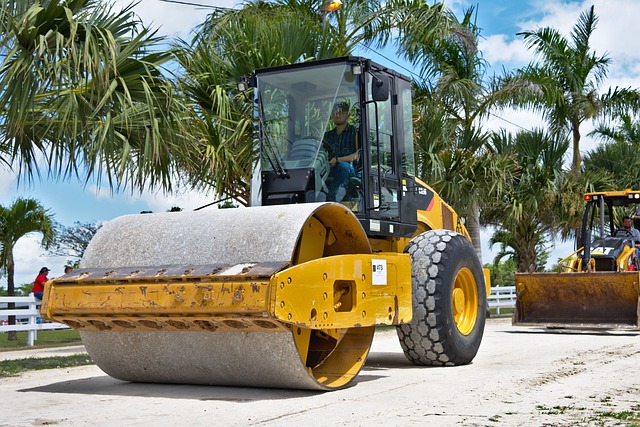
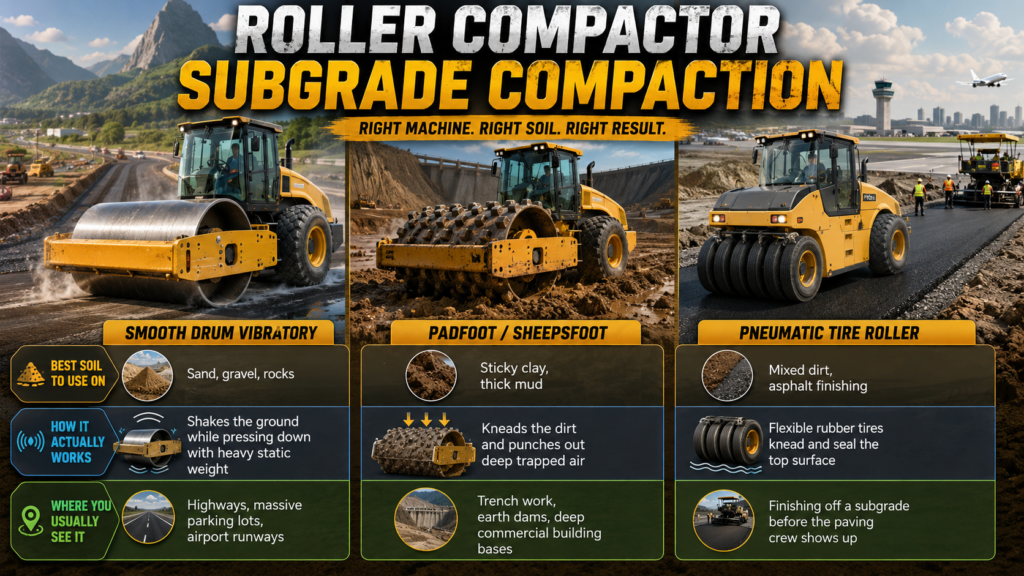
Different types of dirt need totally different types of compaction gear to get tight. If you’re working with sandy, gravelly, rocky stuff, you want a smooth drum vibratory roller. The massive vibrations literally shake the rocks and sand into a locked, puzzle-like fit.
But if you’re dealing with thick, sticky, nasty clay, a smooth drum will just skate right over the top and do almost nothing. For clay, you need a padfoot roller compactor (some guys in the field call it a sheepsfoot). Those big steel knobs punch deep down into the dirt, kneading it like bread dough and squeezing the air out from the bottom all the way up. Bring the wrong roller to the job, and you’re just burning expensive diesel fuel for zero results.
Table: Roller Compactor Subgrade Compaction
| Machine Type | Best Soil to Use On | How It Actually Works | Where You Usually See It |
| Smooth Drum Vibratory | Sand, gravel, rocks | Shakes the ground while pressing down with heavy static weight | Highways, massive parking lots, airport runways |
| Padfoot / Sheepsfoot | Sticky clay, thick mud | Kneads the dirt and punches out deep trapped air | Trench work, earth dams, deep commercial building bases |
| Pneumatic Tire Roller | Mixed dirt, asphalt finishing | Flexible rubber tires knead and seal the top surface | Finishing off a subgrade before the paving crew shows up |
- Pairing dirt with iron: Always check your geotechnical soil report before renting or buying a machine, so you get the exact compaction style that specific dirt demands.
- Getting the weight right: Make sure the machine is heavy enough and has enough punch to push all the way through the thick layer of dirt you just dumped out.
- Picking the drum size: A wider drum gets the job done way faster, but you need something a bit more nimble if you are working around tight corners or deep inside trenches.
High-Tech Tricks for Modern Subgrade Compaction
The old days of just driving back and forth until the ground looks hard to the naked eye are totally over. Modern mega-projects require serious, documented proof that the subgrade compaction is totally up to spec.
Today, the smartest contractors are using Intelligent Compaction (IC) systems. It sounds pretty fancy, but it basically just means the roller compactor is loaded with GPS, vibration sensors, and a digital screen right inside the cab that maps out exactly what’s happening beneath the heavy drum.
As the operator drives, the screen lights up with colors to show which areas are packed tight and which spots are still soft and dangerous. This tech completely stops operators from guessing. They don’t waste their time rolling over dirt that’s already finished, and they never accidentally leave a soft spot behind that could fail later on.
- Smart rolling systems: Using in-cab screens to see the ground stiffness in real time, saving tons of fuel and stopping crews from beating up dirt that’s already completely compacted.
- Watching the lift layers: Making sure the dump trucks and dozers only spread a few inches of dirt at a time so the machine’s vibration energy actually reaches the very bottom of the pile.
- Tracking where you’ve been: Using precision GPS to track the roller’s exact path on a screen, easily proving to the fussy site inspectors that every single square inch got covered properly.
Fixing Crappy Soil Before You Start Rolling
Let’s be real for a second—sometimes the dirt you find on your job site is just absolute garbage. You might dig down and hit a massive patch of super expansive clay or find out the water table is way higher than anyone thought.
When the native dirt is terrible, standard subgrade compaction alone isn’t going to save you. You have to stabilize the soil first before you even think about packing it down. This means getting a bit creative. Sometimes you have to truck in loads of good crushed stone and physically blend it in.
Other times, you have to break out the heavy chemistry. Dirt crews will blow dry cement, fly ash, or quicklime right into the wet, nasty soil and till it up. This kicks off a chemical reaction that literally sucks the water out and turns weak mud into a rock-hard, cement-like base. Only then can your roller compactor actually do its job to build those flawless foundations.
- Mixing in heavy chemicals: Tilling quicklime or Portland cement directly into awful, wet clay to instantly dry it out and give the soft ground some actual backbone.
- Laying down grids: Rolling out heavy-duty geogrid fabrics over the really soft spots to act kind of like a snowshoe, spreading the heavy weights out so the ground doesn’t cave in.
- Getting rid of the water: Digging out proper drainage trenches and setting up loud dewatering pumps so rain and groundwater don’t ruin your perfectly prepped dirt base.
Keeping Your Crew Safe and Your Machines Running
You simply can’t hit your project deadlines if your iron breaks down or, worse, someone gets hurt on the job. Subgrade compaction is incredibly tough on equipment. The massive vibrations that pack the dirt so well are also actively trying to shake the machine itself to pieces.
At Roller Compactor, we constantly tell everyone to stay ahead of the game with rigorous daily maintenance. Check your high-pressure hydraulic lines, grease the fittings, and make sure those heavy rubber shock mounts aren’t shredded. And please don’t forget the operator.
Driving a massive, top-heavy roller along the edge of a soft ditch or a steep slope is sketchy business. Rollovers happen way faster than you’d think. Training your crew to wear their seatbelts, respect the angles, and understand the absolute limits of their machine is the only way to make sure everyone goes home safe when the day is done.
- Daily machine checkups: Walking around the machine every single morning to check for leaky hoses, loose bolts, and low fluid levels before ever turning the key.
- Protecting the operator: Teaching guys how to safely handle soft edges and making sure they stay strapped inside the ROPS safety cab in case the heavy machine accidentally tips over.
- Checking the shaker system: Keeping a close, trained eye on the internal eccentric weights that create the vibration, because if they lock up or break, your machine is basically a useless paperweight.
FAQs – Roller Compactor Subgrade Compaction
What is the main point of subgrade compaction?
The whole point is to squeeze the empty air pockets out of loose dirt so it packs together tight. This makes the ground strong enough to hold up heavy buildings or roads without sinking, and it seals up the dirt so rainwater doesn’t turn it back into mud.
How do inspectors know if subgrade compaction is actually done right?
The guys with the clipboards use special tools like a Nuclear Density Gauge or they run a Sand Cone Test right there in the dirt. They check the packed dirt against the lab results to make sure you hit the target—usually around 95% to 98% of the dirt’s maximum possible density.
What in the world is Optimum Moisture Content (OMC)?
It’s basically the “sweet spot” for water in the dirt. If you hit the OMC, the water acts like a perfect lubricant so the dirt packs down as tight as physically possible. Too dry and it won’t pack; too wet and it turns into a bouncy mud puddle.
What kind of roller compactor do I need for sticky clay?
If you are working with nasty clay, you absolutely need a padfoot roller (the ones with the big metal knobs on the drum). Smooth drums just slide over clay, but a padfoot punches down deep and kneads the clay like dough to get the air out.
Can you actually over-compact dirt?
Oh, definitely. If you keep rolling and vibrating past the limit, you can actually shatter gravel into useless dust. If it’s wet clay, rolling it too much will pump all the hidden water to the top and turn your hard dirt into a spongy, ruined mess.
What is the difference between soil stabilization and regular compaction?
Compaction is just using a heavy machine to pack the dirt you already have. Stabilization is when the dirt is so bad you have to alter it—usually by mixing in dry cement or lime—to chemically change it from useless mud into a hard, workable base.
Why do people talk about “lift thickness” so much?
Lift thickness is just how deep the loose dirt is spread before you start rolling. If you dump a massive three-foot pile and try to roll it, the machine’s power will only pack the top few inches. You have to put it down in small, manageable layers (usually 6 to 12 inches) so it gets tight all the way to the bottom.