How to Identify the Right Spare Parts for Your Roller Compactor Model
It is very frustrating if you cannot find spare parts for your industrial equipment, especially if you are losing money while your rolls are at the maintenance shop. But anyone who uses roller compactors can tell you that the skill to identify the right parts fast and accurately will always be the one thing to help you keep the equipment running for a long time, safely, and with maximum output. To make the roller compactor spare parts identification easier, the first thing to do is to identify the make, model, and the year to choose for the Spare Parts for your roller compactor.
The only record that will yield you correct details for an air-tight part identification is the technical documentation of your machine. Parts that are supplied to repair or replace a generic product do not really fit the parts that were originally designed for your particular model at all.
The first step in any successful maintenance journey is understanding the ‘identity’ of your machine. Every roller compactor comes with a specific manufacturer’s plate, usually located on the frame or near the engine compartment, which contains the serial number, model designation, and year of manufacture.
The Critical Role of Model Identification and Documentation
Using the part number from the exploded parts list that typically comes with the machine and cross-referencing it with the parts catalog of the online spare parts dealer, that is, using a dedicated but comfortable website that sells only roller compactors spare parts is the most accurate way of finding the parts required by the compactor model without having to get down to the physical inspection of the parts which is in practice quite time-consuming and requires some technical expertise.
- Locate the Serial Number Plate: Always find the physical plate on your machine’s chassis to verify the exact model and series.
- Utilize Exploded View Diagrams: These diagrams help you see how parts fit together, making it easier to identify small components like O-rings or fasteners.
- Cross-Reference OEM Numbers: Use the original part numbers from your manual when searching on rollercompactor.net to ensure 100% compatibility.
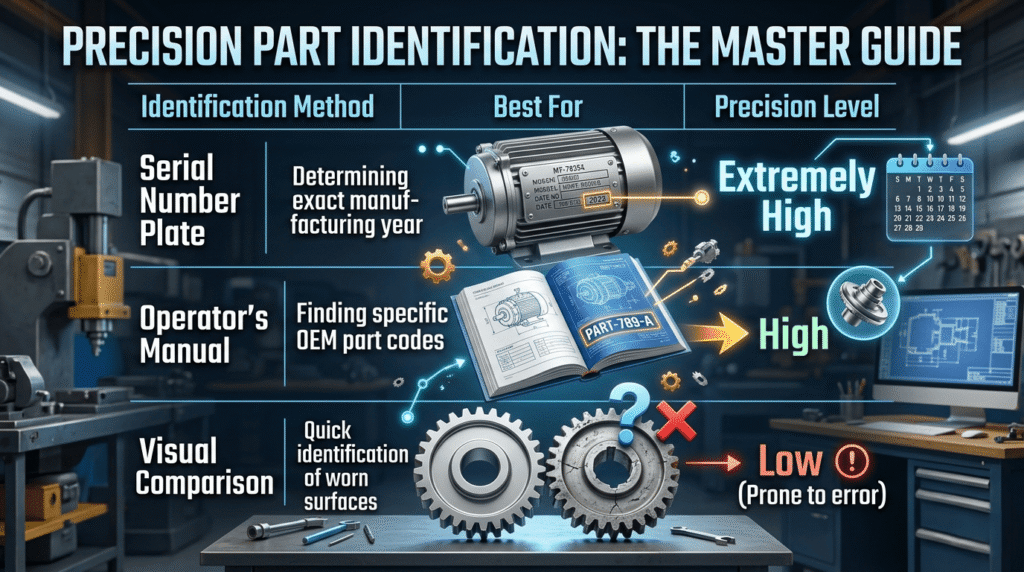
Table: Spare Parts for Your Roller Compactor Model
| Identification Method | Best For | Precision Level |
| Serial Number Plate | Determining exact manufacturing year | Extremely High |
| Operator’s Manual | Finding specific OEM part codes | High |
| Visual Comparison | Quick identification of worn surfaces | Low (Prone to error) |
Analyzing the Feeding and Compaction Systems
A feeding system of a roller compactor is the section that material first comes in contact with and it usually consists of a hopper, a feed screw (auger), and in some cases a vacuum de-aeration unit.
The parts identified for this zone must be based on the type of feed that the machine uses. For example, abrasive soil will cause wear on the metallurgy of the feed screw, while pharmaceutical powder will require a different one entirely.
Likewise, the compaction unit is the single most important set of rollers for your machine. You should know whether you will use smooth, corrugated, or fluted rollers and also the roller diameter and shaft diameter.
- Check the Feed Screw Pitch: Ensure the replacement auger matches the material flow rate of your specific model.
- Inspect Roller Surface Type: Identify if your model uses smooth drums for asphalt or “padfoot” shells for cohesive soil kneading.
- Verify Scraper Blade Specs: Scraper blades must be matched to the drum width and material type (e.g., polyurethane vs. hardened steel).
Maintaining the Hydraulic and Vibration “Muscles”
The power is given by the hydraulic system for compressing the material with the required force whereas the level of density of the surface is achieved by vibrations generated by the vibratory system.
These two systems are constantly subjected to very high pressures and temperature changes and hence these are the most frequent zones for part replacement.
When you are surveying the hydraulic hoses, seals or pumps, you must, besides the pressure ratings, also examine the fitting types. As far as vibratory systems are concerned, identifying the correct eccentric weights and vibration isolators (shock mounts) are critical to prevent the machine’s vibrations from damaging the frame or causing operator fatigue.
- Match Pressure Ratings: Ensure hydraulic hoses and seals can handle the 2–50 kN force settings typical of high-end compactors.
- Identify Vibration Isolators: Look for the specific durometer (hardness) of the rubber mounts to ensure they match your model’s frequency.
- Monitor Exciter Oil Seals: Small leaks in the exciter housing can lead to total system failure; identify these by checking your model’s seal kit specifications.
Electrical Components and PLC Control Units
In most cases, roller compactors are directly monitored by a brain-like control unit called the PLC (Programmable Logic Controller) which is operated via a touch-screen interface. If you are looking to find electrical replacement parts like sensors, fuses, and relays; you have to be very accurate because modern machines use sensors for monitoring all parameters like roller speed, temperature, pressure, etc.
If a speed sensor fails, the entire PLC might halt production. When sourcing these parts, ensure the connectors and voltage requirements (12V vs. 24V) are identical to original equipment.
- Verify Sensor Types: Identify whether you need an inductive, capacitive, or ultrasonic sensor based on your model’s diagnostic panel.
- Check PLC Versioning: Ensure any replacement control boards are compatible with your current software version.
- Stock Critical Fuses: Keep a list of the exact amperage for every fuse in your control box to prevent prolonged electrical downtime.
Common Wear Parts and Consumables Checklist
Identifying the right spare parts for your roller compactor model can be an overwhelming experience, especially for the ones with new roller compactors. You can read the document of parts which came with your equipment, search for useful exploded parts lists in the spare parts suppliers online catalogs, check the manufacturer’s or distributor’s sites for the latest technical updates, and look for the parts’ pictures and dimensions comparison so you can check what you need to buy.
It is also good to bookmark the site for roller compactor parts so you can quickly switch to it any time the need arises without spending time looking for it.
Maintain a “frequent-buy” list and “spare parts inventory” and plan periods for the purchase of consumables. Consumables are parts such as filters, nozzles, belts, etc. which wear out within a battle cycle and are unavoidable consumables that are constantly undergoing wear and tear whilst the equipment is being used and hence which must be replaced without failure.
Having consumables as a list and/or in the inventory will prevent a situation when you urgently need a consumable but it can only be obtained from your supplier after a lengthy waiting period which will of course result in downtime.
| Category | Spare Part | Importance | Typical Replacement Interval |
| Consumables | Air & Fuel Filters | High | 250–500 Hours |
| Wear Parts | Scraper Blades | Medium | 500–1,000 Hours |
| Critical | Hydraulic Seals | High | Upon sign of leak |
| Electrical | Speed/Temp Sensors | Medium | As needed (Diagnostic alert) |
Strategies for Sourcing Hard-to-Find Parts
Some machines will come with diagnostics and others might leave it up to the operator to be observant, in either case, it is important to keep the machines in good running condition and replacing small worn parts will help to prevent the complete failure of the machine.
When looking for a missing or hard-to-find spare part for your roller compactor, you have to realize that the right part number has only been issued once during the production cycle of the compactor and the availability of that part number depends on the manufacturers’ decisions and shortages of production.
Besides the comfort of brand-new parts, buying OEMs also gives your equipment continued warranty protection from the OEM and has a better resale value. Make sure you consult with the OEM parts specialists in order to get the correct part number and product.
If it is the case that OEM replacement parts are no longer being made, you will have to explore alternative high-quality aftermarket options that meet the original specifications and even in some instances exceed them.
FAQs: Identifying the right spare parts for your roller compactor model
How to identify the serial number of a roller compactor?
The serial number will most likely be found on a small metal identification tag attached or riveted to the main frame. Usually near the operator’s seat or engine compartment. If the tag is missing, the number may be stamped onto the engine block or should be listed somewhere in the machine’s original purchase documentation.
What is the difference between OEM spare parts and after-market parts?
OEM parts are made by the machine’s manufacturer under their brand name and are guaranteed to fit the original equipment without any modifications. After-market parts are manufactured by third-party companies which may be close replicas but can differ in several aspects including quality, price, and sometimes warranty.
How long do scraper blades last on a roller?
The life of scraper blades varies greatly depending on the type of application and material processed; however, as a general guide, blades may need replacement after about 500 to 1,000 hours of use. Regular inspection is always a good practice; if the blades no longer keep the drum surface clean or have been worn down significantly, they should be replaced without delay.
Are the same spare parts used for different roller compactor models?
Partially. Some consumables or non-critical components may be the same across different models but parts such as hydraulic pumps, rollers and sensors are usually model specific and should be obtained based on your machine serial number for best results.
What causes my roller compactor to produce too many ‘fines’ or loose powder?
One of the most common reasons that a roller compacting produces too much fines or loose powder is that the rollers are worn out and the gap setting between the rollers is not correct. It could also be the case that the scraper blades or de-aeration unit are malfunctioning.
What are the most important spare parts to keep on hand?
If you want to keep your downtime to the minimum, you should have air and fuel filters, hydraulic seals, scraper blades, drive belts, and common electrical fuses on hand at all times. These are the “high-wear” items that are essential for daily operation.
How do I know if my hydraulic pump is failing and needs to be replaced?
Typical symptoms include a whining noise that is not usual, a slow response of controls, and generation of excessive heat. If you are consistently getting hydralic pressure readings that are below the manufacturer’s specifications and at the same time, the fluid and filters have just been changed, it most likely means that the pump needs replacement.