Vibratory Roller Maintenance: How to Make Your Machine Last Longer
When you spend a lot of money on construction equipment, getting the most return on your investment is your main goal. Whether you are laying down miles of fresh asphalt on a hot summer day or compacting soil to build a massive commercial foundation, your equipment takes a beating. The vibratory compactor is one of the most important but highly stressed machines on any work site which should be taken care with the proper vibratory roller maintenance.
Importance of Vibratory roller maintenance
Vibratory roller maintenance is not only about how the machine looks, it’s about peak performance, avoiding catastrophic breakdown and operator safety. At rollercompactor.net, we understand that downtime is lost revenue. A machine sitting in the repair shop while your crew sits around on site can eat into your profit margins in a matter of hours.
A proactive, rigid maintenance program can dramatically extend your machine’s life, keep it running at optimal compaction density and keep your projects moving smoothly and on schedule.
Proper vibratory roller maintenance is much more than just changing the oil when the manual tells you to. It requires an in-depth knowledge of the machine’s complex systems, from the heavy-duty hydraulics that propel the machine to the sensitive eccentric weights that create the compaction force.
Treat your equipment with the respect it deserves and it will reward you with years of unwavering reliability. A comprehensive look at the daily, weekly and seasonal routines that will keep your compactor rolling strong for thousands of operating hours.
- Reduces Costly Downtime: Regular inspections catch minor wear and tear before it escalates into massive and expensive mechanical failures that halt your entire construction project.
- Protects Operator Safety: Well-maintained steering, braking and hydraulic systems help avoid sudden failures that may lead to serious on-site accidents.
- Improved Compaction Quality: A well calibrated vibration system produces consistent ground density, avoiding costly rework and failed grade inspections.
Daily Inspection & Pre-Operational Procedures
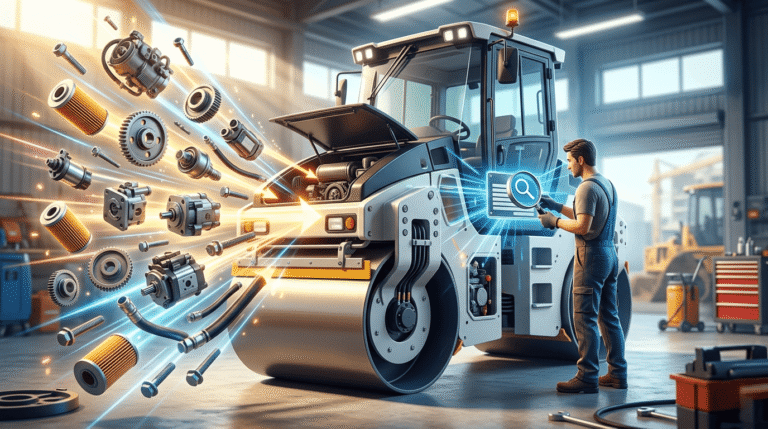
Good vibratory roller maintenance starts long before the turn of the ignition key. The single best way to catch issues before they happen is to develop a strict daily walk around habit. Operators should be trained to approach the machine critically, scanning for the telltale signs of overnight leaks, vandalism, or damage suffered in the last few hours of the previous shift.
This includes checking under the chassis for puddles of hydraulic fluid or engine oil – immediate red flags that hoses have been compromised or seals blown. The structural integrity of the roll-over protection structure (ROPS) and the condition of the tires (if operating a single-drum soil compactor) should also be checked to ensure the machine is safe to enter the rugged terrain of a construction zone.
Daily vibratory roller maintenance requires more than just a visual scan; it requires hands-on fluid checks. On a perfectly level ground, the engine oil, engine coolant and hydraulic fluid levels must be checked using the dipsticks and sight glasses.
If you are driving a heavy duty compactor with low hydraulic fluid you will cause severe cavitation in the pumps and thousands of dollars in damages in minutes. Operators also must check the air filter restriction indicators. Compacting dry soil creates huge dust clouds that can quickly choke a diesel engine, causing overheating and loss of power.
- Fluid Level Check: Daily check engine oil, coolant and hydraulic fluids to prevent catastrophic internal friction and pump failure.
- Drum Scrapers Inspection: Ensure drum scrapers are correctly adjusted and free of hardened debris to prevent drum scoring and asphalt buildup.
- Visual Leak Detection: Look for wet spots on hoses, cylinders, and under the machine to identify small hydraulic leaks before they burst under pressure.
Engine and Hydraulic System Maintenance
Hydraulics is the heart and soul of your machine — it controls everything from the drive and steering to the engaging of the vibratory functions. So maintenance of the hydraulic system is a critical part of your vibratory roller maintenance program. Hydraulic fluid needs to be clean.
Even minute contaminants introduced when refilling fluid can scratch the highly polished internal parts of hydraulic valves and drive motors. Never miss intervals at the manufacturer for the change of hydraulic filters and fluid. The engine driving these pumps also needs close attention.
Clean air, pristine oil and high quality diesel fuel is non-negotiable. Modern emission compliant diesel engines are very sensitive to fuel contamination and therefore, water separators must be drained on a daily basis to prevent injector failure.
Cooling on vibratory rollers is a very difficult job. The machines usually move very slowly, so there is not much natural air flow to help the radiator. Therefore, part of your vibratory roller maintenance should include blowing the radiator fins out with compressed air to remove dust, dirt and stray debris.
If the radiator is obstructed, engine and hydraulic oil temperatures will rise to dangerous levels, which can lead to safety shutdowns or permanent thermal damage to internal engine components. The tightness and condition of the engine drive belts must be carefully watched. A slipping fan belt will immediately ruin the cooling efficiency of the entire system.
- Clean out the radiator fins regularly to remove dust and dirt to maintain maximum air flow and to prevent engine overheating during slow speed operation.
- Fuel System Management: To prevent water damage to sensitive electronic fuel injectors, drain water separators daily and replace fuel filters according to schedule.
- Hydraulic Filter Change Don’t delay hydraulic filter changes. Clean fluid is the only way to protect against early wear of costly drive motors and pumps.
Drum and Vibration System Maintenance
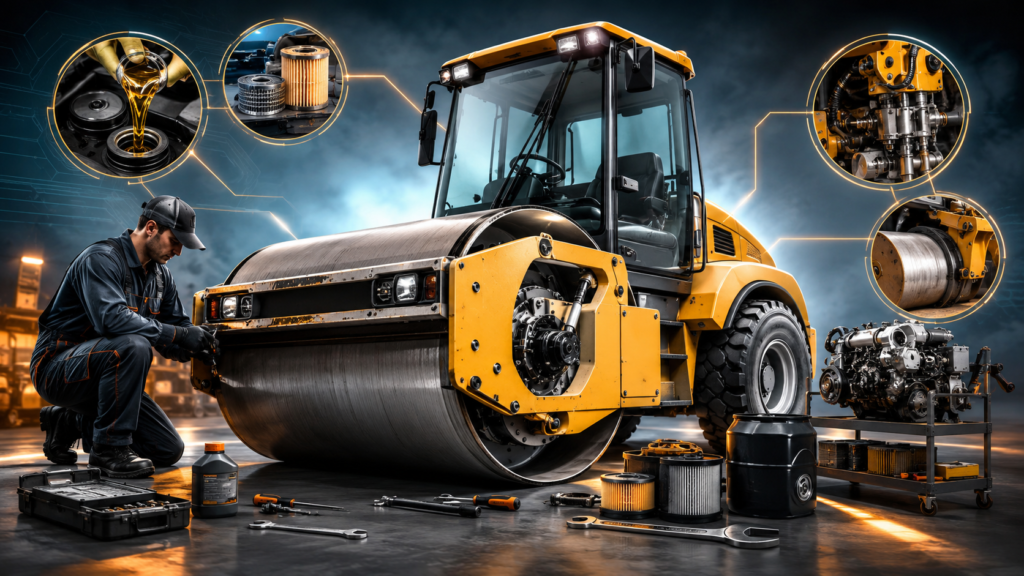
Inside the drum, the internal mechanisms are subjected to extreme G-forces and immense stress, where the real work is done. The eccentric shaft is in the middle of the drum and rotates at high speed, creating the characteristic vibration of the machine. The bearings that support this shaft are subjected to tremendous loads and need special synthetic gear oils.
These must be changed carefully according to your vibratory roller maintenance schedule. If the oil in the eccentric housing deteriorates or leaks out, the bearings will fail and cause catastrophic damage to the inside of the drum. You should check the oil level in the vibratory housing on a regular basis, typically through a sight glass or check plug on the side of the drum, and be on the lookout for any milky discoloration, which would indicate water intrusion.
Equally important are the rubber shock mounts (isolation buffers) that connect the vibrating drum to the main frame of the machine. These key elements isolate the operator’s cab and engine from the destructive effects of the vibration. These rubber mounts can crack, tear or become oil soaked and fail over time.
If they fail, the vibration travels straight to the chassis, quickly shaking bolts loose, cracking welds and destroying electrical components. Regular inspections of the mounts are also part of vibratory roller maintenance. If one mount becomes damaged, the entire set of mounts should be replaced to ensure even load distribution.
- Eccentric Bearing Lubrication: strictly monitor and replace the oil in vibration housing to avoid the total failure of the eccentric shaft bearings.
- Rubber Shock Mount Inspection: Inspect isolation buffers for deep cracks, sagging or oil saturation to protect the chassis and operator from extreme vibrations.
- Drum Surface Maintenance: Drum Surface Maintenance Clean the drum and cover deep gouges immediately to maintain a smooth finish on asphalt surfaces.
Fluid Control and Lubrication
Heavy machinery has friction as its adversary. Constant lubrication is the definitive defense in your maintenance arsenal. A typical soil or asphalt compactor has many articulation joints, steering cylinders and pivot points that need daily greasing. If you don’t keep these grease zerks filled the metal will rub on metal and it will lead to sloppy steering, erratic handling and eventually expensive pin and bushing replacement.
A significant part of vibratory roller maintenance is identifying the location of each grease point according to your particular model. Operators should wipe grease fittings clean before attaching the grease gun. You don’t want to force abrasive dirt straight into delicate bearings.
Fluid management is also used for the water spray systems on asphalt drum rollers. If you’re paving, the water system prevents the hot asphalt from sticking to the cold steel drums. The system is based on water pumps, fine nozzles and inline filters. Any dirty water from ponds or contaminated site tanks will plug the nozzles immediately, causing dry spots on the drum and tearing up the fresh asphalt mat.
The water system has to be completely drained at the end of each shift, especially in cold weather, to prevent ice expansion cracking the plastic tanks, pumps and spray bars.
- Articulation Joint Greasing: Apply a high-quality lithium-based grease on a daily basis to lubricate the center articulation joint, ensuring accurate steering control and reducing bushing wear.
- Clean Greasing Practices: Wipe dirt and grime from grease zerks before greasing. Injecting dirt and grime directly into the machine’s pivot points adds abrasive particles.
- Flushing the Water System: Flush the inline water filters regularly and drain the spray tanks in cold weather to prevent damage to the asphalt wetting system.
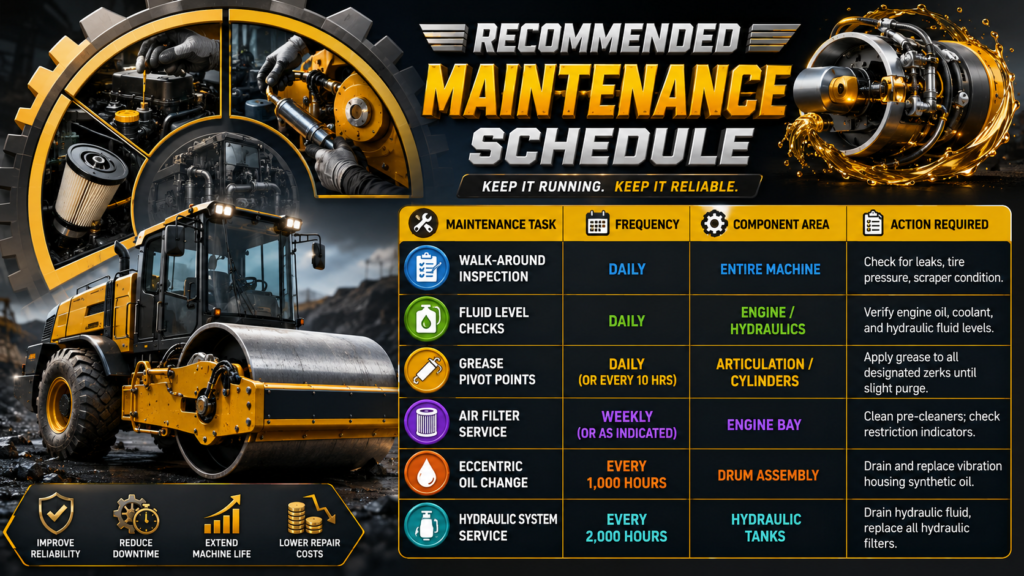
Table of Recommended Maintenance Schedule
| Maintenance Task | Frequency | Component Area | Action Required |
| Walk-around Inspection | Daily | Entire Machine | Check for leaks, tire pressure, scraper condition. |
| Fluid Level Checks | Daily | Engine / Hydraulics | Verify engine oil, coolant, and hydraulic fluid levels. |
| Grease Pivot Points | Daily (or every 10 hrs) | Articulation / Cylinders | Apply grease to all designated zerks until slight purge. |
| Air Filter Service | Weekly (or as indicated) | Engine Bay | Clean pre-cleaners; check restriction indicators. |
| Eccentric Oil Change | Every 1,000 Hours | Drum Assembly | Drain and replace vibration housing synthetic oil. |
| Hydraulic System Service | Every 2,000 Hours | Hydraulic Tanks | Drain hydraulic fluid, replace all hydraulic filters. |
Extended Protection and Seasonal Storage
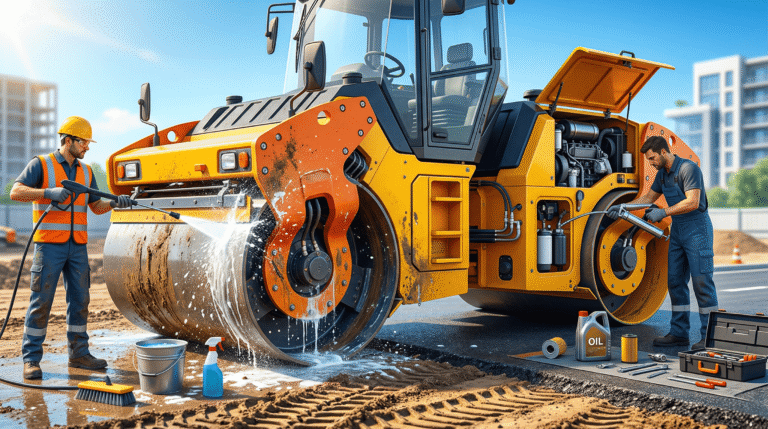
Construction seasons are different and there will be times your equipment sits idle for long periods of time. How you prepare your equipment for this downtime will determine how easy it will be to start up when the next job comes along. Seasonal vibratory roller maintenance involves a complete cleaning of the whole machine to eliminate corrosive substances such as highly acidic soils or chemical binders used in asphalt.
Any exposed hydraulic cylinder rods should be cleaned and then coated with a protective layer of grease or a specialized rust inhibitor to prevent pitting from moisture in the air. As soon as the machine is put back into service these pitted cylinder rods will chew up the hydraulic seals causing massive fluid leaks.
In addition, proper fuel management during storage is important. If you leave a tank half full of fuel, as the temperature changes condensation can form inside the tank walls. This water gets into the diesel fuel and encourages the growth of algae and microbes that will severely clog the fuel lines and filters when starting up.
To avoid this, fill the tank with fresh fuel and add a high quality diesel stabilizer. Finally, remove the batteries and store them in a climate-controlled environment, connected to a trickle charger. Proper off-season maintenance of your vibratory roller ensures that your equipment wakes from its hibernation ready to generate revenue immediately.
- Cylinder Rod Protection: During storage, exposed shiny metal cylinder rods should be coated with heavy grease to prevent rust and damage to hydraulic seals.
- Tank Stabilizer: Fill the diesel tank to the brim and add a stabilizer to prevent condensation in the fuel tank, internal rusting and microbial algae growth during the off season.
- Battery Preservation: Remove the batteries from the cold machine and place on a maintainer in your house to extend their life and ensure a strong start next season.
FAQs on Vibratory Roller Maintenance
How often should my vibratory roller be serviced?
Operating hours dictate routine service. Daily checks (fluids, greasing) are a must. Minor services (engine oil, fuel filters) are usually done at 250 to 500 hour intervals, while major services (hydraulic fluids, eccentric drum oil) are typically done at 1,000 to 2,000-hour intervals. Always refer to your OEM manual from the specific manufacturer.
What is the best hydraulic fluid to use in a vibratory roller?
Modern vibratory rollers almost always require high-quality anti-wear hydraulic fluids such as ISO VG 46 or ISO VG 68 depending on the ambient temperature conditions where you are located. To protect the hydrostatic drive systems, it is important to use the exact specification recommended by the manufacturer.
My vibratory roller is not vibrating, why is that?
Vibration failure usually stems from an electrical issue (defective activation switch or solenoid valve), a hydraulic problem (faulty vibration drive motor or insufficient hydraulic pressure) or a mechanical failure (broken coupling or seized eccentric bearings).
How to clean asphalt roller drum?
Asphalt Rollers It is important that the drum be kept clean so ensure that the water spray system is in good working order. Use eco-friendly asphalt release agents. Do not use diesel fuel to clean the drum on a fresh asphalt mat as it will break down the asphalt. Heavy-duty scraper bars for hard buildup.
How do you know if your shock mounts on a compactor are going bad?
Signs of worn out rubber isolation mounts include easy to see deep cracks, separation of the rubber from the metal backing plates, an angled drum, or the operator feeling extreme vibrations inside the cab that were not present before.
How to increase the fuel economy of my road roller?
Keeping the engine air filters clean , the right tire pressure on pneumatic models , avoiding excessive idling , and making sure the hydraulic system is not bypassing or overheating puts an unnecessary parasitic load on the engine and can maximize fuel efficiency .
What is the daily maintenance checklist for vibratory roller?
Daily checklist should include: Engine oil, hydraulic oil and coolant levels Fuel/water separator drain Grease articulation joints and steering cylinders Inspect drum scrapers Visual walk around to look for loose bolts, leaks and damaged shock mounts