7 signs that it’s time to get new attachments for your wheel loader
In the dangerous world of moving dirt and materials, your wheel loader is only as good as the tool at the end of its arms. A lot of fleet managers pay attention to engine hours and hydraulic pressure, but the wheel loader attachments usually have to do the hardest work. Over time, wear and tear, changes in project needs, and advances in technology can make your once-reliable attachments into problems.
At rollercompactor.net, we know that keeping your operations running smoothly and efficiently is the most important thing. Using old or broken attachments doesn’t just slow you down; it also cuts into your profits and makes the site less safe. Upgrading your tools is a smart move that will keep you competitive in a changing industry.
Here are the seven clear signs that it’s time to upgrade your wheel loader attachments to keep them working at their best.
Top 7 Signs for Wheel Loader Attachments Replacement
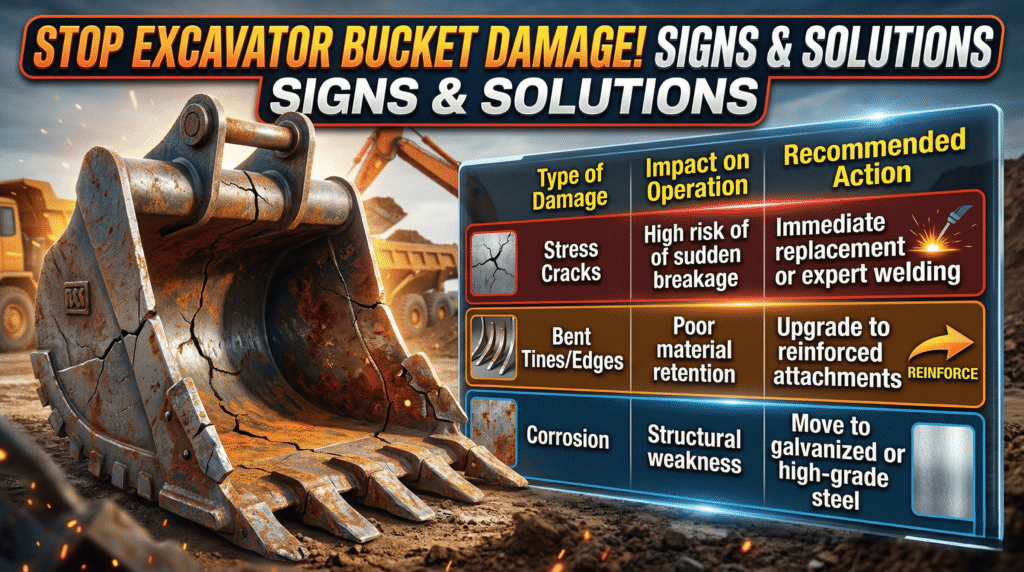
1. Cracks and visible structural fatigue
The most clear sign that an upgrade is needed is when the hardware starts to break down. Wheel loader Attachments, such as buckets, grapples, and forks, have to deal with a lot of twisting stress. As time goes on, the steel’s structural integrity starts to break down, which can lead to safety issues and equipment failure.
- Hairline Fractures: Small cracks near weld points or areas of high stress show that the metal has reached its limit of fatigue.
- Warping and bending: If the edge of your bucket isn’t straight anymore or your pallet forks aren’t level, it makes the load less stable and raises the risk of spills.
- Thinning Shells: Handling rough materials for years thins out the bottoms of buckets, making them more likely to puncture when they are full.
Table: Upgrade Your Wheel Loader Attachments
| Type of Damage | Impact on Operation | Recommended Action |
| Stress Cracks | High risk of sudden breakage | Immediate replacement or expert welding |
| Bent Tines/Edges | Poor material retention | Upgrade to reinforced attachments |
| Corrosion | Structural weakness | Move to galvanized or high-grade steel |
2. Maintenance and repair costs are going through the roof
Every machine has a “tipping point” where the cost of keeping it running is higher than the value it adds. If you see your mechanics spending more time welding patches onto an old bucket than the machine spends moving dirt, your wheel loader attachments are no longer assets—they are drains on your capital.
- Frequent Welding: If you have to keep re-welding wear strips and cutting edges, it means the base metal is too damaged to hold a repair.
- Hydraulic Leaks: On powered attachments like grapples or sweepers, frequent seal failures and hose bursts are signs of internal wear that is expensive to fix.
- Part Obsolescence: If you can’t find new teeth, bolts, or seals for an older model, it’s time to switch to a newer one.
3. Shorter cycle times and better fuel economy
You can tell how efficient you are by how much material you move for every gallon of fuel. Attachments that are old, dull, or not the right shape make the wheel loader’s engine work harder. If your cycle times are slower than the industry average, it’s usually because the machine and the material don’t work well together.
- Dull Cutting Edges: If a bucket can’t easily get through a pile, the loader wastes gas by spinning its tires and pushing harder against the pile.
- Bad Material Retention: Worn-out side cutters or warped shells cause material to “drill” out of the sides, which means you have to make more passes to move the same amount.
- More Weight: Too much patch welding adds “dead weight,” which lowers the loader’s actual payload capacity.
4. Not working with new machine technology
Modern wheel loaders have advanced hydraulic systems and quick-coupler technologies built in. If you’re using old wheel loader attachments on a new machine, you’re probably “throttling” the machine’s power.
- Flow Rate Mismatch: New loaders usually have higher hydraulic flow rates. If your old attachments aren’t rated for this much power, they could overheat or burst.
- Manual vs. Auto-Couplers: If your operators still have to pin attachments by hand while the machine can do it automatically, you’re wasting valuable minutes every hour.
- No Telemetry: Newer attachments can sometimes connect to the loader’s onboard computer to keep track of load weights and efficiency. Older models don’t have this “smart” feature.
5. Requirements for the project are changing
The tools you need depend on the kind of work you do. If your business has changed from general excavation to specialized recycling, forestry, or snow removal, using “general-purpose” attachments will not give you the best results.
- Volume Capacity: If you use a heavy-duty rock bucket to move lighter things like mulch, you won’t be able to move as much volume as you could with a light-material bucket.
- Needs for precision: For projects that need to be very accurate, like laying pipes or fine grading, older, “sloppy” attachments with loose tolerances won’t work.
- Safety Standards: Job sites today have stricter safety rules, and attachments with built-in load-holding valves or better visibility windows are often needed.
6. Too Much Noise and Vibration
A wheel loader should make a steady hum, not a loud clang of metal on metal. Too much vibration is a sign that the attachment doesn’t fit right or that something inside it isn’t working right.
- Pin and Bushing Wear: Too much “play” at the connection points makes the attachment shake the loader’s arms, which wears out the machine too soon.
- Bearing Failure: If you hear grinding noises coming from rotating attachments like sweepers or augers, it means that the internal bearings have broken, which can completely stop the unit from working.
- Operator Fatigue: High vibration levels are sent back to the cab, which makes the operator tired more quickly and makes mistakes more likely.
7. The Growth of “Specialized” Efficiency
In today’s market, “one-size-fits-all” is a sure way to fail. When you can get a new, specialized attachment that can do the work of two older tools, that’s a big sign that it’s time to upgrade.
- 4-in-1 Multi-Purpose Buckets: With a 4-in-1 bucket, you can bulldoze, clam, level, and load without having to switch tools.
- High-Dump Buckets: If you’ve switched to taller trucks, a high-dump attachment can make it so you don’t need a bigger, more expensive loader.
- Quick-Change Systems: By switching to a universal mounting system, your fleet can use attachments on loaders from different brands, which makes the most of your inventory.
FAQs – 7 Signs to Upgrade Your Wheel Loader Attachments
How long do buckets on wheel loaders usually last?
Depending on how rough the material is, a good bucket usually lasts between 5,000 and 10,000 hours. But if you take care of the cutting edge regularly, it can last a lot longer.
Should you fix or replace a loader bucket that is cracked?
Certified welders can fix small cracks. But if the crack is in a major structural rib or the metal has thinned by more than 20%, it’s safer and cheaper in the long run to replace it.
Is it okay to use any brand of attachment on my wheel loader?
A “Universal Quick Attach” or a “ISO Interface” is what most modern loaders use. You can use different brands with your machine if it has this. Before you connect, make sure the hydraulic flow is compatible.
How can I tell if my attachment is making my fuel use go up?
Keep an eye on how many “gallons per ton” you move. If you see the engine RPMs going up a lot just to get through a pile, it’s likely that your attachment is dull or not angled correctly, which wastes fuel.
Which wheel loader attachments will be the most popular in 2024?
High-capacity light-material buckets, hydraulic pallet forks, and “power-tilt” couplers are all popular right now because they can be used in many different ways on construction sites.
Do new attachments make my loader worth more when I sell it?
Yes. Selling a loader with a set of modern, well-maintained attachments makes the equipment much more appealing to buyers and raises its overall value.
How often should I check the attachments on my wheel loader?
You should do a visual check every day. Every 500 hours of operation, a thorough structural inspection for cracks and hydraulic integrity should be done.
Choose Wisely: 7 Signs It’s Time to Upgrade Wheel Loader Attachments
To stay ahead in the construction and mining industries, you need to be proactive about managing your equipment. The “business end” of your machinery is the attachments for your wheel loader. You can make smart choices that increase productivity and keep your crew safe by recognizing these seven signs, which range from physical cracks to technological gaps.
Check out rollercompactor.net for the newest tips and equipment solutions to keep your fleet running at its best. Don’t let an old bucket stop a new machine from working.