Future of Wheel Loader Attachments: Smart Hydraulic Innovations Explained!
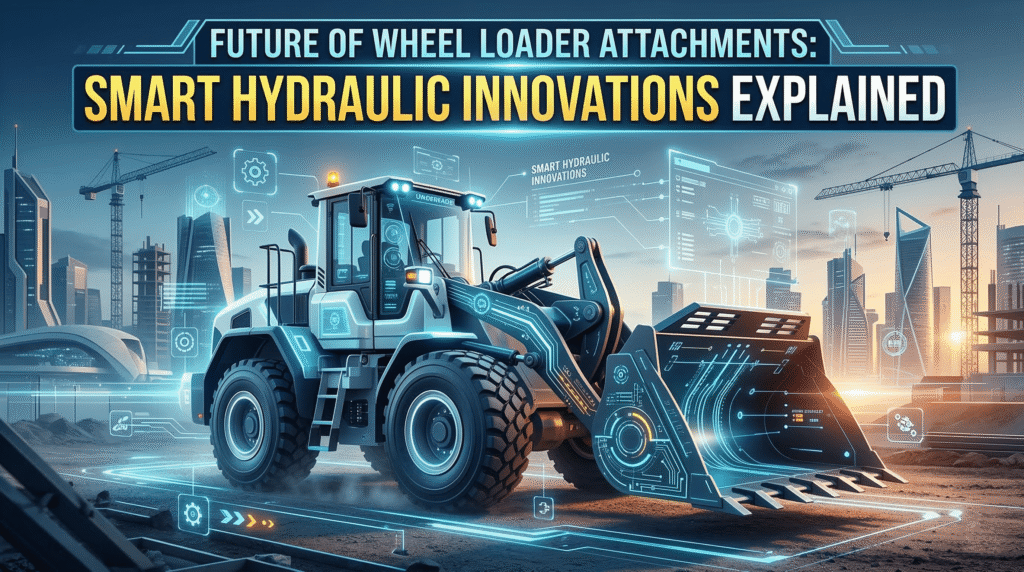
Breaking New Grounds With Wheel Loader Attachments: Smart Hydraulic Innovations. The landscape of construction and earthmoving is being transformed drastically as machines get smarter. The hub of this change is the Wheel Loader Attachments: Smart Hydraulic Innovations, a breakthrough in technology that is converting a simple loader to an extremely accurate and versatile working machine.
It is no longer the case that wheel loaders are just used for the scoop and dump operations; in fact, they have now become the brains of the construction site.
Smart hydraulic systems are the combination of advanced fluid power technology integrated with electronic control units (ECUs) and sensors. These advancements enable the machine to communicate with the attachment, thereby optimizing oil flow and pressure on-the-fly to meet the exact requirements of the operation.
Whether it is a vibratory roller attachment used for precision soil compaction or a high-capacity grapple used for debris management, smart hydraulics guarantee the highest level of efficiency and the least amount of energy waste.
The Developed of Fully Automated Quick Coupler Systems
There is hardly any point that wheel loader efficiency has been improved further to the extent of fully hydraulic and smart quick coupler systems. These systems make it possible for operators to change different wheel loader attachments without leaving the safety and comfort of the cab. The automating of the connection of hydraulic lines removes the need for manual labor and significantly increases safety.
- No lost production time transitions: For switching a bucket to a pallet fork it will only take less than 60 seconds against manual pin-on systems which require 20-30 minutes.
- Better operator safety: Smart couplers employ hydraulic “fail-safe” locking mechanisms and sensors to make sure the attachment is completely secure before the commencement of operation.
- Reduction in spillage of oil: With the use of advanced flat-face couplings in smart systems, the occurrence of hydraulic fluid leaks is minimized, thus not only protecting the environment but also maintaining the pressure of the system.
Dynamic Management of Flow and Load-Sensing
- Advanced wheel loader attachments: Smart hydraulic innovations are characterized largely by their power management skills. Load-sensing, hydraulics ensure that the engine is only performing the attachment’s work requirement. This implies that if you are operating a bucket for light materials, the system will not consume the same energy it would use for a bucket for heavy rock, resulting in huge fuel savings and reduced component wear.
- Valves with proportional control: Through these, it is possible to carry out extraordinarily smooth and accurate operations, which is particularly crucial in delicate tasks like placing pipes with a material handling arm.
- Flexible hydraulics allocation: Whenever it is deemed necessary, the machine may allocate the majority of the hydraulic flow to the attachment, reducing the flow to the steering or travel, therefore maintaining the performance in a demanding environment.
- Flow regulation is thermostatically controlled: The smart systems constantly check the temperature of the hydraulic oil and adjust the flow automatically without leading to overheating during intensive use of the attachment.
The Compaction Revolution: Vibratory and Smart Roller Attachments
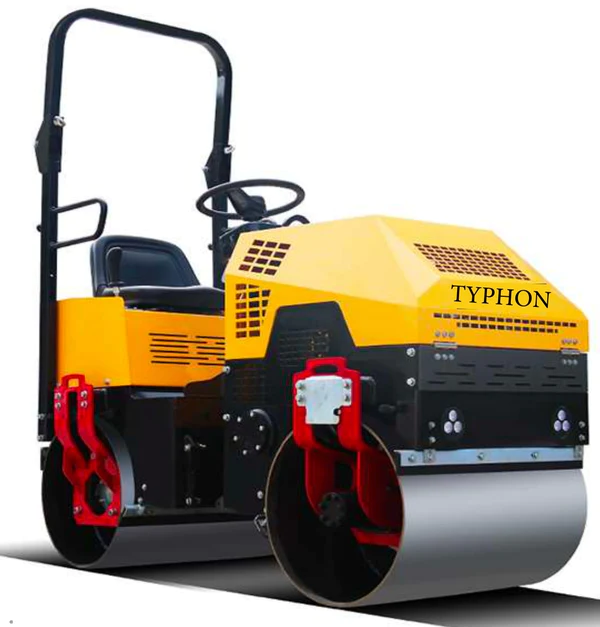
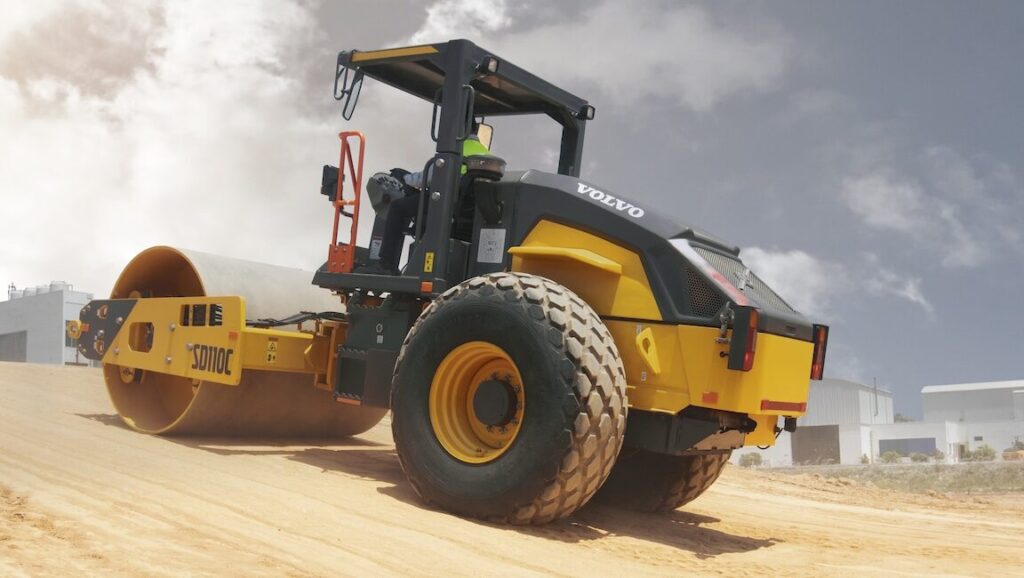
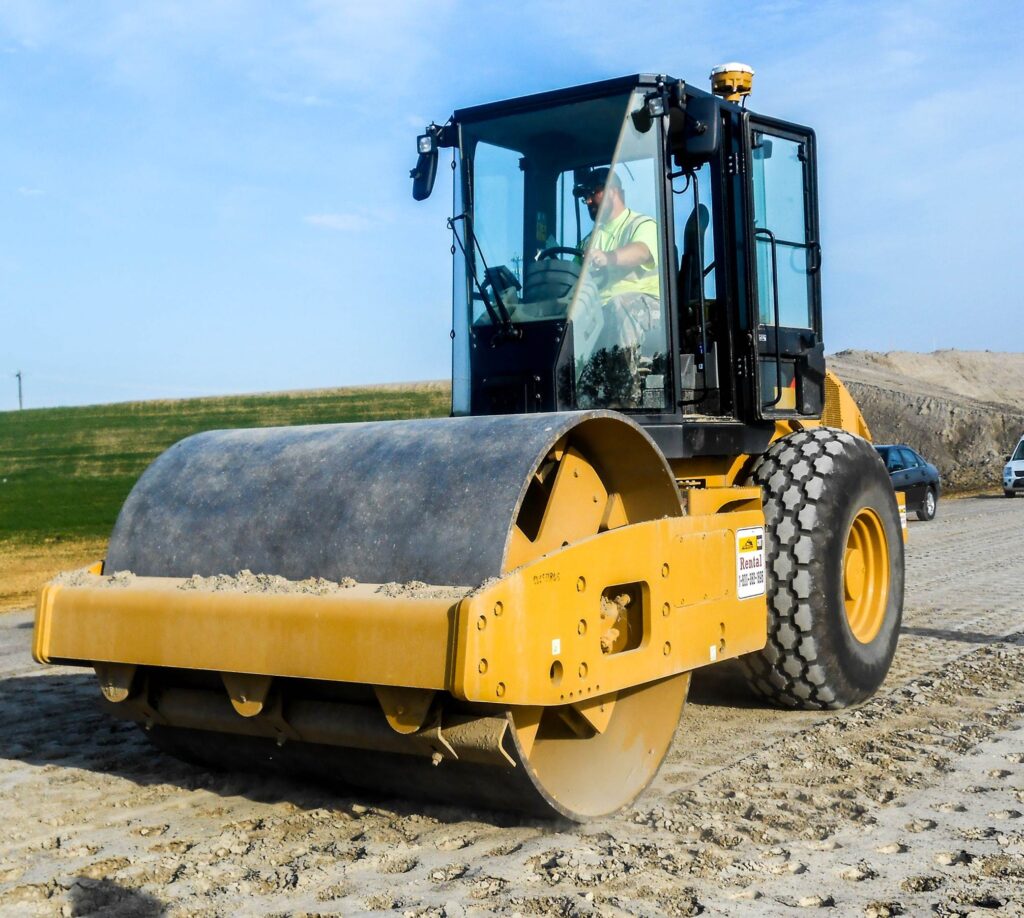
According to references on Roller Compactor, smart hydraulic have been able to change the whole process of how we analyze soil and asphalt density. A wheel loader that is equipped with a smart vibratory roller attachment has the ability to make a soil very dense to the same level as a ride-on compactor that is dedicated but it is through a better and more flexible mobility.
| Feature | Traditional Attachment | Smart Hydraulic Attachment |
| Adjustment | Manual/Static | Automated/Real-time |
| Fuel Efficiency | Standard | Optimized (up to 18% savings) |
| Data Tracking | None | Integrated Sensor Feedback |
| Precision | Operator Dependent | System Assisted |
- Frequency & Amplitude are Adjustable: The operator may, from the cab, adjust the level of vibration on the basis of the varying characteristics of the soil from sandy to clayey.
- Compaction Intelligent Systems: The attachment has sensors that provide data on soil stiffness in real-time so that over-compaction is prevented and needless passes are saved.
- Dampening the Vibration: New hydraulic circuits are designed to be able to absorb the shock of the vibration so that the arm of the loader and operator’s comfort are protected.

The Influence of Telematics and AI on the Attachment Lifecycle
Wheel loader attachments: Smart hydraulic innovations will be the ones that feature not just the hardware side, but also the data management that goes with it. Currently, telematics systems are able to monitor the usage time and level of stress of certain specific attachments.
Through the use of such data, fleet managers are aided in scheduling maintenance services ahead of a breakdown while the grapple bucket and rock bucket are kept at their highest condition for any upcoming job.
- Predictive Maintenance: Get your mobile device or dashboard alerts about a hydraulic seal or wear plate needing to be checked.
- Attachment Recognition Technology: The loader recognizes the attached tool automatically (e.g., an angle broom vs. a snow pusher) and adjusts the hydraulic presets accordingly.
- Workload Analytics: The AI software analyzes the “fill factor” and coaches the operators on loading more efficiently, thus resulting in reduced cycle times.
Redefining Versatility: One Machine, Many Roles
Making the most of a lone machine is precisely the reason why smart hydraulic innovations are created. By doing so, a wheel loader is made into a “Swiss Army Knife” of construction and this results in contractors having fewer specialized machines on-site that decrease transport costs and simplify logistics.
- 4-in-1 Multi-Purpose Buckets: Smart hydraulics help you switch with ease from dozing to scraping, loading and grabbing.
- High-Tip (Roll-Out) Buckets: These are using a second cylinder of hydraulic to load materials at high heights done by trucks which loaders normally cannot.
- Pallet Forks with Hydraulic Side-Shift: Operated by joystick control, the width of the tines can be changed or the load can be shifted left or right for the best placement on uneven ground.
FAQs: Wheel Loader Attachments & Smart Hydraulics
What are the most common wheel loader attachments for construction?
Construction essential attachments are General Purpose Buckets, Pallet Forks, Grapple Buckets, and Rock Buckets. For specialized work, many contractors also use vibratory roller attachments and Snow Pushers to extend their utility throughout the year.
How do smart hydraulic innovations improve fuel efficiency?
Smart hydraulics feature load-sensing pumps that only deliver the exact amount of oil flow and pressure needed by the attachment. That way, the engine does not work excessively leading to fuel consumption reduction by 15-20% in operations with a lot of attachment use.
Is it possible to retrofit older wheel loaders with smart attachment systems?
Yes, there are many manufacturers who make retrofit kits available for hydraulic quick couplers and secondary auxiliary lines. Nevertheless, the complete “smart” integration (such as AI recognition and automated flow adjustment) usually comes with the newer models having electronic control systems.
What is the difference between a mechanical and a hydraulic quick coupler?
A mechanical coupler requires the operator to manually engage a pin, whereas a hydraulic quick coupler uses the machine’s fluid power to lock the attachment in place. Smart hydraulic couplers further automate the connection of the hydraulic hoses themselves.
How does a vibratory roller attachment for a wheel loader compare to a dedicated compactor?
The wheel loader with a vibratory roller attachment has the advantages of greater maneuverability in cramped spaces and faster transit time between sites. Dedicated rollers are best for large scale highway projects while the attachment is the most cost-effective option for medium scale roadwork and landscaping.
Can smart hydraulics prevent the “breakout force” loss often associated with couplers?
Coupling systems in modern “wedge” or “Fusion” styles are intended to keep the attachment nearer the loader’s pins. This, paired with smart hydraulic pressure compensation, guarantees that the breakout force is virtually unchanged from the traditional pin-on fixture.
Why is maintenance more important for smart hydraulic attachments?
Smart systems depend on precision sensors and electronic valves that need to be kept clean to work as expected. The hydraulic fluid needs to be of very high quality as dirt can damage the sensitive components leading to very expensive repairs and system malfunctions.
In Conclusion: Choose the Wheel Loader Attachments
Towards the Smart Construction Site, This path of Wheel Loader Attachments: Smart Hydraulic Innovations is still at its infancy. We will see even tighter integration with autonomous technology and all-electric powertrains as we approach 2030.
For today’s contractors, smart attachments are not just a luxury to be enjoyed; rather, it is a vital weapon in the battle for competitiveness, safety, and efficiency in an ever-demanding industry. Through Roller Compactor, you are getting the most advanced equipment that would pose your fleet for the infrastructural development of the future.