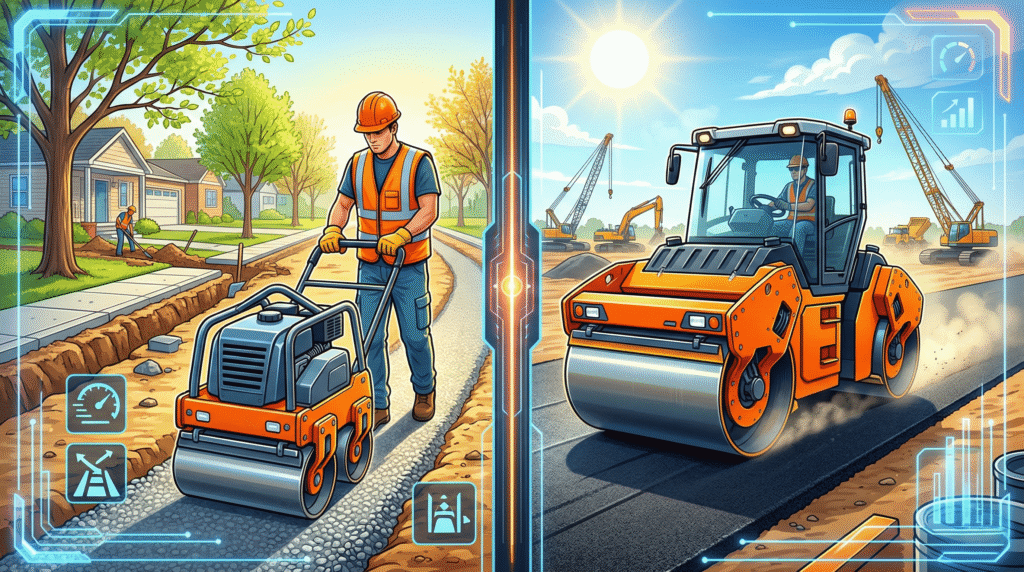
Walk-Behind Roller vs. Ride-On Roller Compactors : Top 10 Benefits – When to Use and Which Season
With compaction being a critical factor of any project that is to last for years, the correct machinery for a compaction task becomes the major focus of any project manager’s attention. The decision between walk-behind roller Vs. ride-on roller compactors is the major concern for most of the construction machinery enthusiasts.
Though both equipment function to compress soil, gravel, or asphalt to make them denser by removing the air pockets, they are constructed for very different size scales and environments. Having a good understanding of these two types will not only guarantee quality of structure and budget saving, but also safety at work.
This detailed write-up will discuss the advantages of each type, the best season for their operation, and how to make the right choice based on your requirements.
Knowing about Walk-Behind Roller Compactors
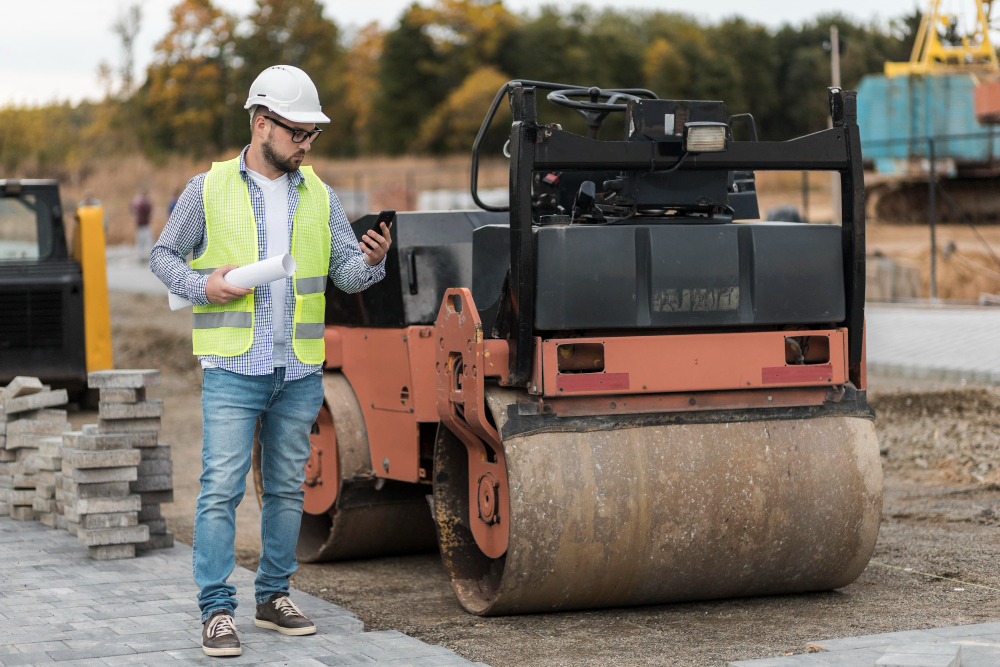
Walk-behind rollers are also known as pedestrian roller machines which are the most suitable in those construction sites where space is very limited. The operator can control of these machines while walking behind or beside them thus giving them the most outstanding precision in places where it’s almost impossible for the big machinery to get in.
These rollers are mainly used in small projects or finishing work of tight corners along curbs and around utility structures. Without question, modern walk-behind rollers produce a lot of centrifugal force hence are perfect machines for compacting both granular soil and asphalt patching.
- Precision and Control: By literally holding the handles and maneuvering the machine manually an operator is able to work at edges and narrow spaces with extreme accuracy hence no damage to the surrounding structures.
- Cost-effectiveness: Compared to their heavy-duty counterpart, these machines cost less to buy and rent, use less fuel and are easier to maintain.
- Easy to Transport: Generally small in size, they can be loaded into a small trailer or truck bed with ease hence no need for heavy-haul permits of a specialized nature.
The Power of Ride-On Roller Compactors
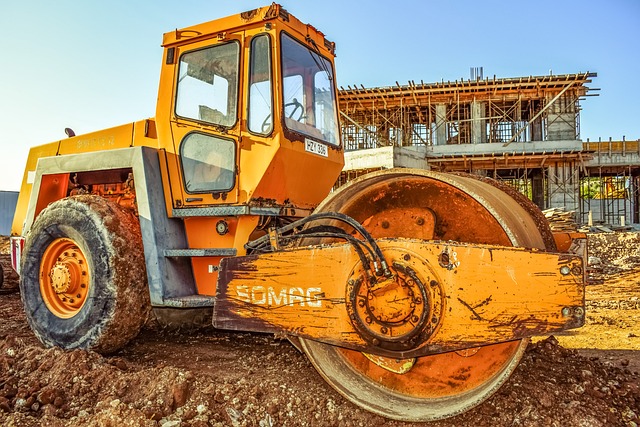
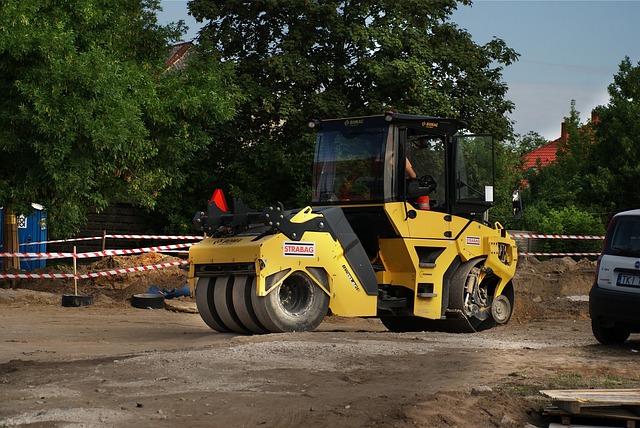
For smaller projects like local parking lots, heavy-duty pads, and roadworks, Ride-on Roller Compactor machines are the right equipment. The operators sit on these vehicles as they run along the surface of the earth.
The rolls or drums come in two forms i.e. smooth or padfoot configurations and the compaction force of these machines is so high that they are capable of densifying vast areas of surfaces uniformly. The main advantage of ride-on units is the amount of work they can do within a limited time.
Not only can such machines in a single pass cover a large surface but they can also, through higher static and dynamic weight, bring about densification much faster thus saving schedule.
- High Production Rates: The large drum width and high speeds facilitate rapid completion of projects that are large in scale, which is the reason they are chosen for commercial developments.
- Operator Comfort and Safety: Fitted with features like comfortable seat, ROPS (Roll-Over Protective Structures), climate control in cabbed models, these machines help decrease operator fatigue on long shifts.
- Advanced Compaction Technology: Several ride-on roller models have intelligent compaction systems built-in that offer real-time data on soil density thereby guaranteeing uniform results over the whole site.
Top 10 Advantages of Using Modern Roller Compactors
Deciding on one type of roller will largely determine the extent of your benefits and the range of uses you get from it. Whether it is a walk-behind or a ride-on model, the continuous technological developments have opened the possibility for these machines to be used for a variety of tasks other than just soil preparation.
Improved pavement durability and reduction in the disturbance of the natural habitat through construction are just a couple of the benefits that have been achieved. Here is a list of top ten points justifying the need for special compaction equipment in our construction projects.
1. Improved Load-Bearing Capacities: Well compacted surfaces don’t give in to settling, cracking or shifting under heavy load over a longer time.
2. Better Waterproofing: Compactors diminishes the permeability of the material by eliminating the air pockets thus preventing the water from seeping in and causing erosion or damage due to freeze-thaw cycles.
3. Optimal Use of Materials: Thorough compaction results in better bonding of materials and thus a stronger outcome can be attained with just the intended amount of asphalt or soil.
4. Adaptability to all ground conditions: New generation rollers allow adjusting of their vibration frequencies and amplitudes which enable one machine to be effective on sand, clay, and gravel.
5. Long-Term Maintenance Cost: Properly compacted surfaces hardly need repairs which lengthening their lifespans thus saving huge amounts of money for owners in maintenance.
6. Safety Aspects Enhanced: Well-compact ground is a safer surface for construction-phase heavy machinery and vehicles.
7. Environment Friendly: High-efficiency engines combined with shorter compaction cycles reduce the time the engines run on idle mode thus overall carbon emissions on the job site are lowered.
8. Even Surface Finishing: The finish brought about by the machines is level, pleasant to the eye and completely suitable for public roads, footpaths, and commercial walkways.
9. Suitable for Special Work: With features like trench roller or the smooth-drum, the machines can be adjusted to specific engineering requirements.
10. Property Value Raised: Good quality infrastructure such as a driveway or a commercial lot raises the value of the property and gives it a professional look.
When to Use: Project-Specific Selection – Walk-Behind Roller vs. Ride-On Roller Compactors
Which type of equipment to choose between walk-behind and ride-on is essentially determined by the ” Three S ‘s”: Scale, Space, and Specifications.
One would naturally choose a walk-behind roller if the job at hand were a residential sidewalk or a utility trench which is narrow. On the other hand, a walk-behind unit used as the compactor of an airport runway or a highway would perform terribly.
In addition, one has to consider the thickness of the “lift” (the layer of the material that is being compacted); thicker layers would require the heavier weight and higher centrifugal force of a ride-on roller to reach the bottom of the layer.
- Walk-behind rollers are the perfect choice for narrow trenches because they can get where a larger machine would get stuck, and also a bigger machine might be a safety hazard for the trench walls.
- When it comes to small-scale asphalt repair work or pothole filling, walk-behind rollers allow easy mobility from one small spot to another.
- In large earthmoving work, ride-on rollers are indispensable for prepping the site of a housing development or an industrial park where thousands of cubic yards of soil require stabilization.
Seasonal Considerations: The Best Time for Compaction
Just as important as the choice of the machine is the time when compaction work is done. Weather conditions have an immediate effect on the moisture content in the soil and the temperature of the asphalt which are two critical factors in achieving the highest possible density.
Normally, the transition seasons of late spring and early fall are considered the ideal or “Goldilocks” periods for performing compaction.
- Spring Compaction: An excellent time to stabilize the soil because the ground is thawing; however, operators need to watch out for “soft spots” that result from surplus meltwater or heavy precipitation
- Summer Issues: During the scorching days of summer, asphalt tends to remain in a plastic condition for longer and, therefore, prone to being pushed out of place by the heavy roller. Thus, morning time is often preferred for such operations.
- Autumn Benefits: This is the main working period for both paving and compaction. Cooler temperatures allow for fast setting of materials, and lower moisture levels make soil moisture conditions

Comparison Table: Walk-Behind vs. Ride-On
| Feature | Walk-Behind Roller | Ride-On Roller |
| Typical Drum Width | 24 – 32 inches | 40 – 84+ inches |
| Best Application | Tight spaces, curbs, trenches | Highways, parking lots, large sites |
| Transportability | High (Trailer/Truck bed) | Low (Requires heavy hauler) |
| Compaction Depth | Shallow to Medium | Deep (High lift capacity) |
| Operator Role | Walking (Pedestrian) | Seated (On-board) |
FAQs – Walk-Behind Roller vs. Ride-On Roller
Which type is best for a residential driveway: walk-behind or ride-on roller?
A walk-behind roller is better for most residential driveways as it is more flexible in maneuvering around garage doors, flower beds, and sidewalks without causing harm to the already existing landscaping or structures.
Can a roller compactor be employed during a rainfall?
You may continue your compaction work if the rain is light but heavy rain would spoil your compaction project. If there is too much water in the soil, the particles won’t be able to lock together and instead, you would get a “spongy” base which would eventually fail.
How do static and vibratory compaction differ?
Static compaction depends only on the weight of the machine whereas vibratory compaction is achieved by means of an internally rotating weight that causes rapid impacts. Vibratory rollers are the most efficient when it comes to treating granular soils such as sand and gravel.
What is the usual number of passes required by a roller compactor?
This depends on the kind of material but in majority of cases, the number of passes ranges between 3 and 5 for achieving compaction of 95% to 98%. Going over the same spot more times than necessary will cause the material to disintegrate and eventually the base would become weak.
Why do we use a padfoot roller instead of a smooth drum?
Padfoot or sheep’s foot rollers are drums that have “lugs”. Such a roller is meant to be used on cohesive soil like clay, which the “lugs” work on by providing a sort of kneading action that helps the material to become uniformly compacted from the bottom up.
Would I require a special license if I were to operate a ride-on roller?
Most areas require a standard driver’s license but apart from that, to comply with OSHA/local labor laws, one also needs to have safety trainings related to the site and heavy machinery operation which are usually considered mandatory.
What does it take to give my roller compactor the care that would help it last long?
One should always make sure that the drum scrapers are free of debris, the water spray system is not blocked (mainly for asphalt work), and the vibration bearings are regularly greased in order to prevent them from overheating.